TOGAF Enterprise Architecture Part 1 Practice Test


Exam Code: OGEA-101
Exam Name: TOGAF Enterprise Architecture Part 1
Number of Questions: 40 multiple-choice questions
Duration: 60 minutes (1 hour)
Passing Score: 60% (24 out of 40 correct)
Delivery Mode: Supervised at Pearson VUE test centers or via OnVUE online proctored
Introduction
- What is TOGAF- (framework overview- history- evolution from Version 9.2 to 10th Edition).
- Structure of the TOGAF Standard (Fundamental Content- Generic Guidance and Techniques- Boundaryless Information Flow™- Enterprise Architecture Capability).
- How TOGAF evolves: Changes in 10th Edition (e.g.- modular structure- emphasis on digital trends).
Learning Objectives:
- Explain the purpose and scope of TOGAF as an enterprise architecture framework.
- Describe the TOGAF document classification and its components.
- Exam Relevance: Basic recall; understand TOGAF's role in aligning business and IT.
Enterprise Architecture Concepts
- Definitions: Enterprise- architecture- stakeholder- concern- viewpoint- view.
- Architecture domains: Business- Data- Application- Technology.
- Architecture Development Method (ADM) as the core of TOGAF.
- Architecture artifacts- deliverables- and building blocks.
Learning Objectives:
- Define key terms and explain the integrated nature of enterprise architecture.
- Identify the four architecture domains and their interrelationships.
- Exam Relevance: Foundational terminology; multiple-choice on definitions and relationships.
Establishing an Enterprise Architecture Capability
- Architecture governance framework: Principles- roles (e.g.- Chief Architect- Architecture Board).
- Establishing the architecture function: Maturity models- skills framework.
- Architecture principles: Business- data- application- technology principles.
- Implementation roadmap for capability building.
Learning Objectives:
- Describe how to set up and maintain an EA capability within an organization.
- Explain the role of governance in ensuring architecture compliance.
- Exam Relevance: Organizational setup; questions on principles and governance structures.
The Architecture Development Method (ADM) – Phases
- Preliminary Phase: Architecture vision- principles scoping- tailored architecture framework.
- Phase A: Architecture Vision: Stakeholder engagement- vision statement- business scenarios.
- Phase B: Business Architecture: Business models- capabilities- organization structure.
- Phase C: Information Systems Architectures (Data and Application sub-phases): Data entities- application portfolios.
- Phase D: Technology Architecture: Technology standards- infrastructure.
- Phase E: Opportunities and Solutions: Consolidation- decision matrices.
- Phase F: Migration Planning: Roadmap development- gap analysis.
- Phase G: Implementation Governance: Compliance reviews- architecture contracts.
- Phase H: Architecture Change Management: Monitoring- triggers for change.
- ADM guidelines and techniques (e.g.- iteration- levels: strategic/tactical/operational).
Learning Objectives:
- Describe each ADM phase's objectives- inputs- steps- and outputs.
- Explain ADM iteration- partitioning- and security considerations.
- Exam Relevance: Core of the exam; expect questions on phase sequences- inputs/outputs- and when to use techniques.
Applying the ADM
- ADM tailoring: Adapting for different scopes (e.g.- full vs. partial cycle).
- Integration with other management frameworks (e.g.- Zachman- ArchiMate- Agile- DevOps).
- Using TOGAF with architecture content framework.
Learning Objectives:
- Explain how to apply and adapt the ADM in various contexts.
- Describe integration points with complementary tools and standards.
- Exam Relevance: Practical adaptation; questions on tailoring scenarios.
Architecture Governance
- Governance framework components: Policy- compliance- monitoring.
- Architecture Board and decision-making processes.
- Supply chain considerations in governance.
Learning Objectives:
- Define architecture governance and its role in the enterprise.
- Outline governance processes and maturity assessment.
- Exam Relevance: Compliance and oversight; recall-based questions.
Architecture Content
- Content framework: Metamodel- deliverables- artifacts- building blocks.
- Viewpoints and views: Stakeholder concerns mapping.
Learning Objectives:
- Explain the purpose of the architecture content framework.
- Describe how to create and use deliverables/artifacts.
- Exam Relevance: Structure of outputs; basic definitions.

OGEA-101 MCQs
OGEA-101 Exam Questions
OGEA-101 Practice Test
OGEA-101 TestPrep
OGEA-101 Study Guide
killexams.com
The-Open-Group
OGEA-101
TOGAF Enterprise Architecture Part 1
https://killexams.com/pass4sure/exam-detail/OGEA-101
Question: 1239
Facing vendor lock-in in a SaaS procurement for a media streaming service, the EA practitioner applies a
framework whose 1995 debut emphasized reusable building blocks, evolving through 9.2's structural
cleanups to 10th Edition's emphasis on configurability via parameters like API rate limits (e.g., 1000
calls/min) and SLA thresholds (99.99% uptime). This progression aids in multi-vendor orchestration.
Which origin aspect of the framework informs the building block reusability for this procurement?
A. 1995 TAFIM-derived focus on modular components
B. 2023 ArchiMate conformance updates
C. 2018 metamodel deprecations
D. 2022 digital edition search functionalities
Answer: A
Explanation: The TOGAF Standard's 1995 origin from TAFIM established reusable building blocks as a
core tenet, evolved in the 10th Edition to support configurations like API limits (1000/min) and SLAs
(99.99%), enabling media services to orchestrate multi-vendor SaaS without lock-in through modular,
adaptable architecture.
Question: 1240
Which of the following best describes the role of compliance reviews in Phase G?
A. They serve as a mechanism to ensure alignment with architecture contracts
B. They are optional and can be skipped if time-constrained
C. They primarily focus on financial aspects of the project
D. They are conducted only at the end of the project
Answer: A
Explanation: Compliance reviews serve as a mechanism to ensure alignment with architecture contracts,
helping to identify and address any discrepancies during implementation.
Question: 1241
In a 2026 automotive manufacturer scenario, the EA team is applying TOGAF to integrate autonomous
vehicle software with supply chain analytics. They must select parameters for the Architecture Content
Framework to capture integrated views. Which option correctly identifies the core components of the
TOGAF Content Framework, ensuring deliverables, artifacts, and building blocks support cross-domain
integration?
A. Content Framework excluding artifacts, focusing only on deliverables and building blocks in isolation.
B. Deliverables as modular elements, artifacts as work products, and building blocks as static outputs
without reusability.
C. Building blocks as work products, artifacts as reusable elements, and deliverables as static structures.
D. Artifacts as outputs, deliverables as work products, and building blocks as modular reusable elements
forming the integrated structure.
Answer: D
Explanation: The TOGAF Content Framework comprises deliverables (work products that convey
comprehensive architecture information), artifacts (outputs like diagrams or reports from deliverables),
and building blocks (reusable components of business capability). In the automotive scenario, these
elements enable integrated modeling of software and analytics, where building blocks like modular APIs
form reusable parts of deliverables such as capability maps, ensuring alignment across domains as per
TOGAF's integrated principles.
Question: 1242
In a scenario where an organization is using TOGAF to develop a new IT strategy, which artifact would
be most useful in communicating the architecture to non-technical stakeholders?
A. Technical Architecture Document
B. System Context Diagram
C. Data Flow Diagram
D. Architecture Vision Document
Answer: D
Explanation: The Architecture Vision Document is designed to communicate the overall architecture to
non-technical stakeholders, providing a high-level overview of the architecture's purpose and benefits.
Question: 1243
In the context of Phase B, which of the following best describes a business capability?
A. A specific technology solution implemented
B. A function that an organization must perform to achieve its goals
C. A project that delivers a new product
D. A set of processes and procedures
Answer: B
Explanation: A business capability refers to a function that an organization must perform to achieve its
goals, encompassing the necessary resources and skills.
Question: 1244
In a retail conglomerate implementing omnichannel strategies, the EA team applies TOGAF's governance
framework to oversee vendor integrations. The Architecture Board charter details the Chief Architect's
role in "facilitating Architecture Contracts" with parameters: contract templates including SLAs for
99.9% uptime, conformance clauses tied to principles, and digital signatures via DocuSign. A vendor
contract for payment gateways omits data sovereignty clauses. What is the first step in the TOGAF
contract enforcement procedure the Chief Architect must execute?
A. Conduct a conformance review using the Architecture Contract template
B. Amend the contract inline with Architecture Principles and re-sign
C. Notify the Board and initiate a formal dispute resolution process
D. Update the vendor's entry in the Architecture Repository with provisional status
Answer: A
Explanation: TOGAF 10th Edition specifies that the first step in contract enforcement is to conduct a
conformance review using the dedicated Architecture Contract template, verifying alignment with
principles like "Data is an Asset." This ensures roles such as the Chief Architect maintain governance by
identifying omissions like data sovereignty before amendments or escalations, supporting the function's
maturity through formalized processes.
Question: 1245
During the Preliminary Phase of ADM for a financial services firm implementing blockchain for cross-
border transactions, the enterprise architect identifies the need to partition the architecture effort into
time-scoped segments: short-term (0-12 months) for regulatory compliance modules and long-term (12-
36 months) for full decentralization. Inputs include the corporate governance framework with risk
appetite statements at 5% operational downtime tolerance. What step must the architect execute to
incorporate security considerations, such as encryption key management protocols using AES-256, into
the tailored ADM guidelines?
A. Define Architecture Principles that embed security imperatives, such as "Data at Rest Encryption
Mandatory," and integrate them into the governance framework for all partitions
B. Develop the Opportunities & Solutions deliverable by evaluating vendor proposals with weighted
scoring models based on TCO metrics
C. Conduct Phase F Migration Planning workshops to sequence work packages with dependency graphs
using Microsoft Project parameters
D. Produce Architecture Building Blocks (ABBs) specifications for blockchain nodes, including
consensus algorithm settings like Raft with heartbeat intervals of 150ms
Answer: A
Explanation: In the Preliminary Phase, the step to incorporate security considerations involves defining
Architecture Principles that explicitly include security requirements (e.g., mandatory encryption protocols
like AES-256) and integrating them into the governance framework. This ensures security is foundational
across all partitions, aligning with inputs like risk tolerances and preparing the ADM for iterative
application.
Question: 1246
During a merger integration in a pharmaceutical enterprise, the architecture team identifies conflicting
data governance principles between legacy systems, risking non-compliance with FDA regulations. The
governance role must facilitate principle rationalization using TOGAF's template sections like Rationale
and Implications. Which body, positioned within the broader IT governance structure, approves the
consolidated principles set for enterprise-wide use?
A. Compliance Committee
B. Architecture Board
C. Data Stewardship Council
D. Executive Steering Group
Answer: B
Explanation: The Architecture Board, as defined in TOGAF's governance framework, approves
consolidated architecture principles post-rationalization, using templates that detail business benefits,
rationale, and implications (e.g., FDA alignment impacts). This ensures principles guide merger
integrations without conflicts, maintaining oversight across the enterprise's IT and corporate governance
layers.
Question: 1247
A retail conglomerate applies the ADM to integrate omnichannel customer experiences across physical
stores, e-commerce, and mobile apps, using AI personalization engines. During Phase F, the architect
finalizes the Implementation and Migration Plan, incorporating Transition Architectures derived from
gap-analyzed building blocks. TOGAF mandates that this plan includes parameters for risk mitigation
and dependency mapping. What specific deliverable in Phase F ensures these building blocks are
contractually bound to development partners, and how does it interface with Phase G?
A. The Communications Plan, which focuses on stakeholder engagement without building block
enforcement.
B. The Architecture Roadmap, which outlines high-level timelines without contractual details, interfacing
via informal updates.
C. The Statement of Architecture Work, which is Phase A-specific and does not bind partners.
D. The Architecture Contract with Development Partners, which details building block specifications and
acceptance criteria, interfacing with Phase G by providing governance baselines for compliance reviews
during implementation.
Answer: D
Explanation: In Phase F (Migration Planning), the Architecture Contract with Development Partners is a
key deliverable that contractually specifies building block implementations (e.g., AI engine integrations),
including parameters for risks and dependencies. It interfaces with Phase G (Implementation Governance)
by establishing enforceable baselines, ensuring the omnichannel project's Transition Architectures are
realized compliantly, with mechanisms for ongoing reviews and adjustments.
Question: 1248
In a healthcare conglomerate implementing blockchain for patient data interoperability, the EA
practitioners are configuring the Architecture Content Framework to include new artifacts (e.g.,
consensus algorithm parameters set to Byzantine Fault Tolerance with 4f+1 node validation). Facing
resource constraints, they prioritize TOGAF's modular evolution to avoid redundant documentation. What
10th Edition change from 9.2 best supports this by streamlining navigation for targeted digital trend
applications?
A. Expansion of the TOGAF Library to 23 independent papers
B. Refreshed modular structure for simpler framework application
C. Mandatory adoption of Digital Practitioner Body of Knowledge integration
D. Shift in deliverable versioning to approved status exclusively
Answer: B
Explanation: The refreshed modular structure in the 10th Edition evolves from 9.2 by dividing content
into Fundamental Content and Series Guides, streamlining navigation and allowing targeted configuration
for digital trends like blockchain artifacts without requiring full framework traversal.
Question: 1249
In a scenario for an insurance firm building EA capability with blockchain for parametric policies
triggered by climate sensors, the implementation roadmap needs data principle integration early. What
TOGAF step sequence prioritizes this for sensor data veracity?
A. 1. Define data veracity principles for sensor feeds; 2. Integrate with blockchain oracles; 3. Roadmap
triggers with verification gates; 4. Quarterly principle efficacy tests.
B. 1. Integrate oracles first; 2. Define principles later.
C. 1. Skip veracity; 2. Focus on roadmap only.
D. 1. Tests without integration.
Answer: A
Explanation: Defining veracity principles upfront guides oracle integrations, with gated roadmaps and
tests ensuring reliable triggers. This Preliminary Phase per TOGAF anchors capability building in
trustworthy data flows.
Question: 1250
For a retail bank's Phase C Application sub-phase, the portfolio catalogs 120 apps including core banking
(Temenos T24 r20) and mobile apps (React Native v0.72). Target consolidation to 40 apps requires
mapping to capabilities like DigitalOnboarding. Given complex dependencies (e.g., SOAP to REST
migrations), what artifact ensures the portfolio's business alignment before target definition?
A. Application Communication Diagram illustrating interface protocols (e.g., gRPC for microservices),
extended to NFRs like latency (<200ms), without capability mapping.
B. Risk Register from Phase D, adapted for application risks (e.g., downtime probability 5%), used for
prioritization over alignment.
C. Application-business capability matrix, hierarchical from portfolio catalog, to assess support and re-
use, informing rationalization via TOGAF TRM classification.
D. Implementation Factor Catalog from Phase E, assessing migration feasibility (e.g., build vs. buy costs)
prematurely.
Answer: C
Explanation: The application-business capability matrix in Phase C Application sub-phase maps the
hierarchical portfolio to Phase B capabilities, evaluating support and identifying synergies for
consolidation. For banking, it addresses dependencies by validating against TRM, ensuring re-usable
components align with digital goals. This matrix, per TOGAF, is crucial for impact assessment and
diagram development, preventing misaligned targets unlike unrelated risk or factor catalogs.
Question: 1251
Under TOGAF 10, a global bank's Architecture Board approves forex hedging tools in supply chain
finance (volatility threshold: 5%). What decision process, with Monte Carlo simulations, embeds this in
governance frameworks?
A. No simulations
B. Deterministic approvals
C. Structured evaluation with probabilistic modeling integrations
D. Ad-hoc hedging
Answer: C
Explanation: Board evaluations incorporate simulations for thresholds, strengthening supply chain
financial governance.
Question: 1252
For a streaming media service enhancing user engagement through microservices, the application domain
involves specifying platform services like content recommendation engines with API endpoints (RESTful
with OAuth 2.0) and deployment topologies (Kubernetes clusters). The team assesses interactions via
component diagrams. Which TOGAF domain structures these applications to enable business processes
and data utilization?
A. Business Architecture, outlining capabilities ignoring platform details
B. Data Architecture, managing storage without application structures
C. Application Architecture, specifying services and interactions via component diagrams for
microservices like recommendation engines
D. Technology Architecture, focusing on hardware excluding service APIs
Answer: C
Explanation: Application Architecture in the TOGAF Standard, 10th Edition, defines the interactions
between applications and with business processes, including specifications like API endpoints and
deployment topologies in component diagrams; this enables the microservices structure for content
recommendation, enhancing user engagement in the streaming service.
Question: 1253
In a gaming studio's VR ecosystem build, deliverables feature entity mappings (e.g., avatar state
machines with transition probabilities:0.8 idle-to-walk). The team applies TOGAF's latest emphases.
What evolution underscores innovations for immersive digital experiences?
A. Semantic obfuscation in 1800-page documentation
B. Balancing proven methods with cutting-edge concepts
C. Mandatory O-PAS for process automation in phases
D. Focus on OSDU for subsurface data only
Answer: B
Explanation: The 10th Edition balances proven methods with cutting-edge concepts, underscoring
innovations for digital experiences like VR parameters by highlighting emerging ideas in Series Guides.
Question: 1254
A healthcare conglomerate is building its EA capability amid a merger, requiring an implementation
roadmap that incorporates phased adoption of FHIR standards for patient data exchange while migrating
from on-premises EHR systems to a hybrid cloud environment. The roadmap must sequence governance
establishment before tool procurement to avoid siloed implementations. Considering dependencies on
stakeholder buy-in and budget cycles, what is the first critical step in the Preliminary Phase to align this
roadmap with TOGAF's capability building guidelines?
A. Conduct a maturity assessment using the TOGAF Architecture Capability Maturity Model to baseline
current governance structures and identify gaps in FHIR interoperability readiness.
B. Develop a detailed procurement specification for cloud orchestration tools like Kubernetes, prioritizing
vendor evaluations against technical specs without initial governance review.
C. Assemble a cross-functional team of clinicians and IT leads to prototype FHIR APIs, focusing on
immediate data migration pilots to demonstrate quick wins.
D. Finalize the Architecture Vision document with high-level diagrams of the hybrid cloud topology,
deferring maturity assessments until after merger completion.
Answer: A
Explanation: The first critical step is to conduct a maturity assessment using the TOGAF Architecture
Capability Maturity Model, as it establishes a baseline for the current EA capability, identifies gaps in
governance and interoperability (such as FHIR readiness), and informs the sequencing of the
implementation roadmap. This ensures alignment with business drivers like merger integration and
regulatory needs, preventing premature tool procurement or pilots that could lead to non-compliant or
siloed outcomes in the hybrid migration.
Question: 1255
A company is implementing a new governance framework and wants to ensure that it aligns with
industry best practices. What is the best approach to achieve this?
A. Benchmark against competitors
B. Focus solely on internal policies
C. Develop the framework in isolation
D. Consult with industry experts
Answer: D
Explanation: Consulting with industry experts ensures that the governance framework is informed by best
practices, increasing its effectiveness and relevance in the industry context.
Question: 1256
During the Architecture Change Management phase, what is the primary focus of the architecture board?
A. To ensure compliance with architecture standards
B. To approve all project budgets
C. To provide training for new staff
D. To develop marketing strategies for architecture
Answer: A
Explanation: The architecture board's primary focus is to ensure compliance with architecture standards,
guiding the organization in maintaining the integrity of the architecture.
Question: 1257
When defining architecture principles, which aspect is essential for ensuring they remain relevant over
time?
A. Focus on technology trends only
B. Strict adherence to original definitions
C. Flexibility to adapt to changing conditions
D. Limited stakeholder involvement
Answer: C
Explanation: Flexibility to adapt to changing conditions ensures that architecture principles remain
relevant and effective as the business environment evolves.
Question: 1258
A company is undertaking a digital transformation initiative and needs to adapt the ADM for a partial
cycle. Which of the following actions should be prioritized to ensure effective tailoring of the ADM?
A. Conduct a full architecture governance review
B. Identify the specific phases of the ADM that are relevant to the transformation
C. Implement all ADM phases in sequence regardless of scope
D. Focus solely on the Technology Architecture phase
Answer: B
Explanation: Tailoring the ADM for a partial cycle involves identifying the specific phases that are
relevant to the initiative, ensuring that the architecture process aligns with the organization's needs
without unnecessary overhead.
Question: 1259
In Phase F, you are developing a migration roadmap. What should be the primary focus of the first phase
of the roadmap?
A. Quick wins to build momentum
B. Immediate cost savings
C. Long-term strategic goals
D. Technology upgrades
Answer: A
Explanation: Focusing on quick wins helps to build momentum and gain stakeholder support for the
migration effort, making it easier to tackle more complex initiatives later in the roadmap.
Question: 1260
A company is assessing the impact of its governance framework on project outcomes. Which metric
would best indicate the framework's effectiveness?
A. Number of projects completed on time
B. Frequency of governance meetings
C. Rate of policy adherence in projects
D. Level of stakeholder satisfaction
Answer: C
Explanation: The rate of policy adherence in projects directly indicates the effectiveness of the
governance framework, reflecting how well projects align with established architectural standards.
KILLEXAMS.COM
Killexams.com is a leading online platform specializing in high-quality certification
exam preparation. Offering a robust suite of tools, including MCQs, practice tests,
and advanced test engines, Killexams.com empowers candidates to excel in their
certification exams. Discover the key features that make Killexams.com the go-to
choice for exam success.
Exam Questions:
Killexams.com provides exam questions that are experienced in test centers. These questions are
updated regularly to ensure they are up-to-date and relevant to the latest exam syllabus. By
studying these questions, candidates can familiarize themselves with the content and format of
the real exam.
Exam MCQs:
Killexams.com offers exam MCQs in PDF format. These questions contain a comprehensive
collection of questions and answers that cover the exam topics. By using these MCQs, candidate
can enhance their knowledge and improve their chances of success in the certification exam.
Practice Test:
Killexams.com provides practice test through their desktop test engine and online test engine.
These practice tests simulate the real exam environment and help candidates assess their
readiness for the actual exam. The practice test cover a wide range of questions and enable
candidates to identify their strengths and weaknesses.
Guaranteed Success:
Killexams.com offers a success guarantee with the exam MCQs. Killexams claim that by using this
materials, candidates will pass their exams on the first attempt or they will get refund for the
purchase price. This guarantee provides assurance and confidence to individuals preparing for
certification exam.
Updated Contents:
Killexams.com regularly updates its question bank of MCQs to ensure that they are current and
reflect the latest changes in the exam syllabus. This helps candidates stay up-to-date with the exam
content and increases their chances of success.
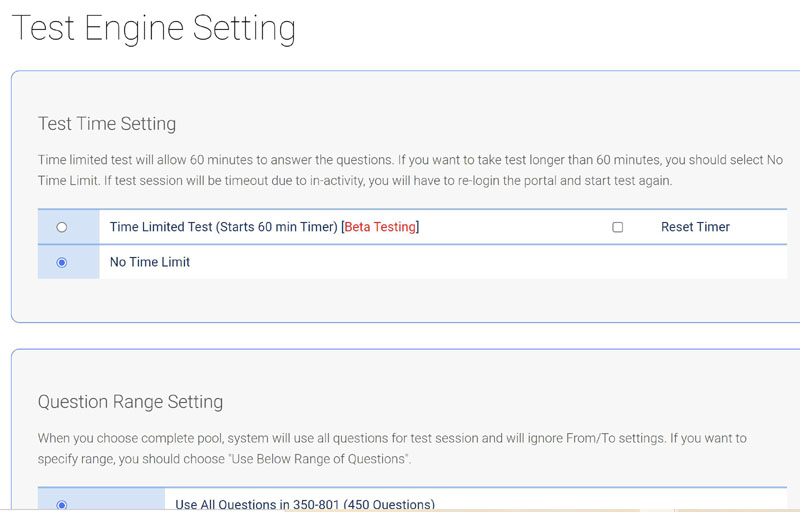
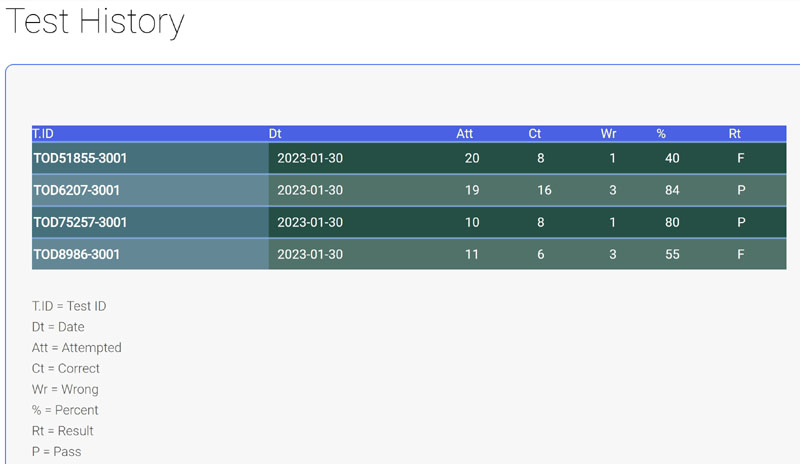
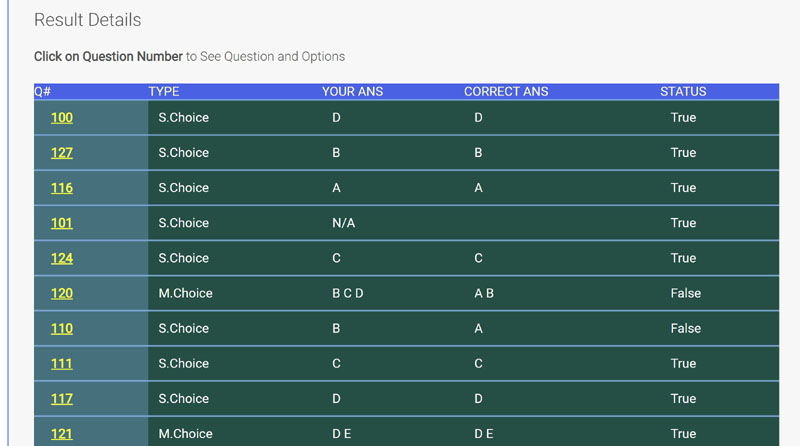
Killexams has introduced Online Test Engine (OTE) that supports iPhone, iPad, Android, Windows and Mac. OGEA-101 Online Testing system will helps you to study and practice using any device. Our OTE provide all features to help you memorize and practice test questions and answers while you are travelling or visiting somewhere. It is best to Practice OGEA-101 MCQs so that you can answer all the questions asked in test center. Our Test Engine uses Questions and Answers from Actual TOGAF Enterprise Architecture Part 1 exam.
Discover top-tier, current, and meticulously crafted OGEA-101 exam preparation materials at killexams.com. Our platform offers precise and cutting-edge OGEA-101 Mock Questions Practice Tests, expertly designed to address all challenging questions comprehensively. By engaging with our OGEA-101 Practice Test, candidates can approach the actual OGEA-101 exam with confidence, eliminating concerns about performance. Dedicate just 10-24 hours to mastering our OGEA-101 MCQs and answers, and step into the real exam fully prepared
Preparing for a critical exam like the The-Open-Group OGEA-101 can feel overwhelming, especially without dependable study resources. At killexams.com, we recognize the value of precise and current exam materials to ensure you pass your TOGAF Enterprise Architecture Part 1 exam effortlessly. That is why we provide a complimentary OGEA-101 Practice Test, featuring authentic exam questions and answers to give you a clear preview of the real test experience. Our free OGEA-101 Practice Test is thoughtfully designed with genuine test questions, allowing you to assess your knowledge and skills before the actual exam. By engaging with our free OGEA-101 Practice Test, you will gain insight into the question formats you will face, enabling more effective and confident preparation. This significantly boosts your chances of passing the The-Open-Group OGEA-101 exam on your first try. At killexams.com, we are committed to empowering our customers with comprehensive and up-to-date OGEA-101 Practice Tests. Our materials are regularly refreshed to provide access to the latest exam questions and answers. We understand the stress of the The-Open-Group OGEA-101 exam, and our goal is to equip you with the finest study tools to ensure your success.
OGEA-101 Practice Questions, OGEA-101 study guides, OGEA-101 Questions and Answers, OGEA-101 Free PDF, OGEA-101 TestPrep, Pass4sure OGEA-101, OGEA-101 Practice Test, Download OGEA-101 Practice Questions, Free OGEA-101 pdf, OGEA-101 Question Bank, OGEA-101 Real Questions, OGEA-101 Mock Test, OGEA-101 Bootcamp, OGEA-101 Download, OGEA-101 VCE, OGEA-101 Test Engine
After failing the OGEA-101 exam twice, killexams.com exam questions materials, provided by my cousin, were a revelation. Their clear format and enriched concepts helped me score 89%, impressing me with their quality. I am thankful for their support in achieving my certification.
Martha nods [2026-6-10]
At the dinner table the other night, my father asked me if I was going to fail my upcoming OGEA-101 exam. I responded confidently with a resounding "No way." Thanks to Killexams.com, I was able to keep my word and pass the exam with excellent results. I am thankful for their help and support.
Martha nods [2026-6-20]
I am sincerely grateful to killexams.com for their exam questions practice tests with actual questions and Exam Simulator, which helped me score 84% on the OGEA-101 exam. Balancing a full-time job made preparation challenging, but their materials made it achievable, and I am glad to have advanced my career with their help.
Martin Hoax [2026-5-6]
More OGEA-101 testimonials...
Are these OGEA-101 practice questions sufficient to pass the exam?
Yes, OGEA-101 practice questions provided by killexams.com are sufficient to pass the exam on the first attempt. Visit killexams.com and register to download the complete question bank of OGEA-101 exam brainpractice questions. These OGEA-101 exam questions are taken from actual exam sources, that\'s why these OGEA-101 exam questions are sufficient to read and pass the exam. Although you can use other sources also for improvement of knowledge like textbooks and other aid material these OGEA-101 practice questions are sufficient to pass the exam. If you have time to study, you can prepare for the exam in very little time. We recommend taking enough time to study and practice OGEA-101 exam practice questions that you are sure that you can answer all the questions that will be asked in the actual OGEA-101 exam.
Certainly, Killexams is 100 percent legit and also fully trusted. There are several benefits that makes killexams.com genuine and legit. It provides up to date and hundred percent valid exam dumps containing real exams questions and answers. Price is nominal as compared to almost all the services on internet. The questions and answers are up graded on frequent basis having most recent brain dumps. Killexams account arrangement and product delivery is quite fast. Record downloading is unlimited and extremely fast. Help is available via Livechat and Contact. These are the characteristics that makes killexams.com a sturdy website that offer exam dumps with real exams questions.
OGEA-101 - TOGAF Enterprise Architecture Part 1 course outline
OGEA-101 - TOGAF Enterprise Architecture Part 1 study help
OGEA-101 - TOGAF Enterprise Architecture Part 1 Practice Questions
OGEA-101 - TOGAF Enterprise Architecture Part 1 boot camp
OGEA-101 - TOGAF Enterprise Architecture Part 1 cheat sheet
OGEA-101 - TOGAF Enterprise Architecture Part 1 test
OGEA-101 - TOGAF Enterprise Architecture Part 1 Exam Questions
OGEA-101 - TOGAF Enterprise Architecture Part 1 PDF Questions
OGEA-101 - TOGAF Enterprise Architecture Part 1 Questions and Answers
OGEA-101 - TOGAF Enterprise Architecture Part 1 Free PDF
OGEA-101 - TOGAF Enterprise Architecture Part 1 test
OGEA-101 - TOGAF Enterprise Architecture Part 1 Exam Cram
OGEA-101 - TOGAF Enterprise Architecture Part 1 exam
OGEA-101 - TOGAF Enterprise Architecture Part 1 techniques
OGEA-101 - TOGAF Enterprise Architecture Part 1 braindumps
OGEA-101 - TOGAF Enterprise Architecture Part 1 braindumps
OGEA-101 - TOGAF Enterprise Architecture Part 1 Exam dumps
OGEA-101 - TOGAF Enterprise Architecture Part 1 test prep
OGEA-101 - TOGAF Enterprise Architecture Part 1 information source
OGEA-101 - TOGAF Enterprise Architecture Part 1 real questions
OGEA-101 - TOGAF Enterprise Architecture Part 1 test
OGEA-101 - TOGAF Enterprise Architecture Part 1 certification
OGEA-101 - TOGAF Enterprise Architecture Part 1 Test Prep
OGEA-101 - TOGAF Enterprise Architecture Part 1 exam format
OGEA-101 - TOGAF Enterprise Architecture Part 1 course outline
OGEA-101 - TOGAF Enterprise Architecture Part 1 test prep
OGEA-101 - TOGAF Enterprise Architecture Part 1 cheat sheet
OGEA-101 - TOGAF Enterprise Architecture Part 1 study help
OGEA-101 - TOGAF Enterprise Architecture Part 1 Question Bank
OGEA-101 - TOGAF Enterprise Architecture Part 1 braindumps
OGEA-101 - TOGAF Enterprise Architecture Part 1 Exam dumps
OGEA-101 - TOGAF Enterprise Architecture Part 1 answers
OGEA-101 - TOGAF Enterprise Architecture Part 1 exam
OGEA-101 - TOGAF Enterprise Architecture Part 1 tricks
OGEA-101 - TOGAF Enterprise Architecture Part 1 questions
OGEA-101 - TOGAF Enterprise Architecture Part 1 Latest Questions
OGEA-101 - TOGAF Enterprise Architecture Part 1 study help
OGEA-101 - TOGAF Enterprise Architecture Part 1 Exam Braindumps
OGEA-101 - TOGAF Enterprise Architecture Part 1 braindumps
OGEA-101 - TOGAF Enterprise Architecture Part 1 techniques
OGEA-101 - TOGAF Enterprise Architecture Part 1 test prep
OGEA-101 - TOGAF Enterprise Architecture Part 1 education
OGEA-101 - TOGAF Enterprise Architecture Part 1 Free PDF
OGEA-101 - TOGAF Enterprise Architecture Part 1 PDF Questions
Prepare smarter and pass your exams on the first attempt with Killexams.com – the trusted source for authentic exam questions and answers. We provide updated and verified practice test questions, study guides, and PDF exam dumps that match the actual exam format. Unlike many other websites that resell outdated material, Killexams.com ensures daily updates and accurate content written and reviewed by certified experts.
Download real exam questions in PDF format instantly and start preparing right away. With our Premium Membership, you get secure login access delivered to your email within minutes, giving you unlimited downloads of the latest questions and answers. For a real exam-like experience, practice with our VCE Exam Simulator, track your progress, and build 100% exam readiness.
Join thousands of successful candidates who trust Killexams.com for reliable exam preparation. Sign up today, access updated materials, and boost your chances of passing your exam on the first try!
Below are some important links for test taking candidates
Medical Exams
Financial Exams
Language Exams
Entrance Tests
Healthcare Exams
Quality Assurance Exams
Project Management Exams
Teacher Qualification Exams
Banking Exams
Request an Exam
Search Any Exam