TOGAF Enterprise Architecture Part 2 Practice Test


Exam Code: OGEA-102
Exam Name: TOGAF Enterprise Architecture Part 2
Number of Questions: 8 scenario-based questions.
Duration: 90 minutes
Passing Score: 24 out of 40 (60%)
1. The Architecture Development Method (ADM)
Phases and their objectives:
- Preliminary (establishing architecture capability)-
- Phase A (vision)-
- Phase B (business architecture)-
- Phase C (information systems architectures: data and application)-
- Phase D (technology architecture)-
- Phase E (opportunities and solutions)-
- Phase F (migration planning)-
- Phase G (implementation governance)-
- Phase H (architecture change management)- Requirements Management (central process).
- Iteration and levels: Applying ADM across architecture landscapes (strategic- segment- capability) and using iteration cycles for refinement.
- Tailoring ADM: Adapting for organizational context- such as agile/DevOps integration or regulatory compliance.
- Guidelines and techniques: Iteration- demarcation- and partitioning to scope architecture efforts.
2. Architecture Content Framework
- Deliverables: Formal outputs like Architecture Definition Documents or Transition Architectures.
- Artifacts: Components of deliverables- categorized as catalogs (lists)- matrices (relationships)- and diagrams (visuals).
- Building Blocks: Reusable elements (e.g.- business capabilities or technology standards) classified as Architecture Building Blocks (ABBs) or Solution Building Blocks (SBBs).
- Content metamodel: Core entities (e.g.- actors- business services) and extensions for specific domains.
3. Enterprise Continuum and Tools
- Structure: From generic (Foundation Architectures like TOGAF reference models) to specific (Organization-Specific Architectures).
- Purpose: Promoting asset reuse- reducing duplication- and supporting migration from common to tailored solutions.
- Tools: Repository management for storing building blocks and ensuring interoperability.
4. TOGAF Reference Models
- Technical Reference Model (TRM): Layers for applications- information- and technology.
- Integrated Information Infrastructure Reference Model (II-RM): Focuses on boundaryless information flow.
- Boundaryless Information Flow: Enabling seamless data exchange across the enterprise.
5. Architecture Capability Framework
- Architecture Board: Oversight body for decisions.
- Maturity models: Assessing EA capability levels.
- Skills framework: Roles like Architecture Board- Enterprise Architect.
6. Stakeholder Management and Requirements Management
- Stakeholder mapping: Identifying concerns and influence.
- Requirements handling: Tracing from business to solution levels.
- Business scenarios: Technique for validating requirements.
7. Architecture Domains and Integration
- Domain-specific content: E.g.- Business Capability Map in Phase B.
- Integration: Ensuring cohesion across domains via metamodel.
8. Governance and Compliance
- Compliance reviews: Assessing adherence to principles.
- Risk management: Identifying residual risks post-mitigation.
- Dispensation: Approval for deviations from architecture.

OGEA-102 MCQs
OGEA-102 Exam Questions
OGEA-102 Practice Test
OGEA-102 TestPrep
OGEA-102 Study Guide
killexams.com
The-Open-Group
OGEA-102
TOGAF Enterprise Architecture Part 2
https://killexams.com/pass4sure/exam-detail/OGEA-102
Question: 1032
A company is experiencing challenges with its legacy systems, which are hindering
innovation. Which layer of the TRM should be addressed to overcome these challenges?
A. Information Layer
B. Application Layer
C. Technology Layer
D. Integration Layer
Answer: B
Explanation: Addressing the Application Layer is necessary to overcome challenges with
legacy systems, as it involves modernizing or replacing outdated applications that limit
innovation.
Question: 1033
During a compliance audit, a company discovers that its data retention policies are not
being followed. What action should the compliance team prioritize?
A. Increase the frequency of audits
B. Update the data retention policies
C. Provide training on the policies
D. Investigate the reasons for non-compliance
Answer: D
Explanation: Investigating the reasons for non-compliance allows the organization to
address underlying issues, which is more effective than merely increasing oversight or
revising policies.
Question: 1034
In Phase F, a team is creating a migration roadmap. What should be included to ensure it
is comprehensive and actionable?
A. Only the technical aspects of the migration
B. A timeline, resources needed, and risk assessments
C. A list of all stakeholders involved in the project
D. A summary of the current architecture
Answer: B
Explanation: A comprehensive and actionable migration roadmap should include a
timeline, resources needed, and risk assessments to provide a clear path for the migration
process.
Question: 1035
An organization aims to implement a boundaryless information flow across its
departments. Which component of the Integrated Information Infrastructure Reference
Model (II-RM) should be emphasized?
A. Service Integration
B. Application Integration
C. Technology Integration
D. Information Integration
Answer: D
Explanation: Information Integration is a key component of the II-RM that facilitates
boundaryless information flow, allowing different departments to share data effectively.
Question: 1036
After implementing a new enterprise architecture framework, an organization discovers
several residual risks. What is the best practice for managing these risks?
A. Continuously monitor and reassess the risks
B. Accept all residual risks as part of the new framework
C. Eliminate all risks through additional budget allocation
D. Assign each residual risk to a different team for management
Answer: A
Explanation: The best practice for managing residual risks is to continuously monitor and
reassess them. This ongoing process ensures that the organization remains aware of
potential issues and can respond appropriately.
Question: 1037
During the integration of CRM dynamics with Salesforce sandboxes in a B2B sales
consortium, the III-RM informs conduit service mappings. Which code snippet
equivalent, defining MuleSoft API-led connectivity with RAML 1.0 traits, bridges on-
prem to SaaS for boundaryless lead nurturing?
A. Snippet for SOAP envelope transformations with XSLT stylesheets
B. Snippet enforcing OAuth flows with PKCE challenge codes
C. Snippet using REST resource modeling with hypermedia links
D. Snippet applying event sourcing with Kafka topic projections
Answer: C
Explanation: Conduit services in the III-RM use REST resource modeling snippets with
RAML traits and hypermedia, enabling discoverable, evolvable integrations that support
boundaryless CRM data synchronization.
Question: 1038
In a complex enterprise environment, how can organizations ensure that their architecture
remains flexible and responsive to change?
A. By strictly adhering to the ADM phases
B. By incorporating feedback loops in the ADM
C. By limiting stakeholder involvement
D. By focusing solely on technology architecture
Answer: B
Explanation: Incorporating feedback loops in the ADM allows organizations to remain
flexible and responsive to change, adapting the architecture as needed based on
stakeholder input and evolving requirements.
Question: 1039
Scoping Phase F for a bank's quantum-safe crypto migration under FIPS 140-3, iteration
applies hybrid_schemes with fallback=classical. Which technique?
A. Iteration to test hybrid fallbacks in migration waves, ensuring fips_validation=level3
per cycle
B. Partitioning crypto modules, setting fips_modes=quantum_resistant for key exchanges
C. Demarcation of migration paths, defining switchover_triggers=threat_detected
D. Scope through risk simulations, prioritizing fips gaps in wave planning
Answer: B
Explanation: Partitioning scopes migrations by crypto modes with FIPS params, per
TOGAF. This complex tailoring supports quantum-safe banking in iterative Phase F.
Question: 1040
During the integration of various architecture domains, which metamodel element is
crucial for ensuring that business, information, application, and technology architectures
remain cohesive?
A. Architecture Framework
B. Architecture Views
C. Architecture Principles
D. Architecture Repository
Answer: D
Explanation: The Architecture Repository is crucial for maintaining cohesion across the
architecture domains, as it provides a structured way to store and manage architectural
artifacts and relationships.
Question: 1041
A bioinformatic pipeline in Phase C (Application Portfolio) optimizes workflows.
Baseline serial; target parallel with accuracy params (e.g., 99%). Resolves gaps with
roadmaps?
A. Models simulating parallels.
B. Gaps with roadmaps by accuracies.
C. Highlighting serials.
D. Matrices closures.
Answer: B
Explanation: Resolved Gaps prioritize by params for pipelines.
Question: 1042
A government agency is developing an enterprise architecture that must comply with
multiple regulatory frameworks. Which approach should they take in tailoring the ADM?
A. Focus exclusively on one regulatory framework to simplify the process
B. Integrate compliance checks at each ADM phase to ensure alignment
C. Avoid documentation to speed up the process
D. Use a generic architecture model without customization
Answer: B
Explanation: Integrating compliance checks at each ADM phase ensures that all
regulatory requirements are addressed throughout the architecture development process,
reducing the risk of non-compliance.
Question: 1043
In an automotive manufacturer's TOGAF 10 governance for autonomous vehicle software
updates, a Phase G deviation arises: deploying over-the-air (OTA) updates via a non-
certified channel deviating from the Architecture Contract's ISO 26262 ASIL-D
compliance parameter, motivated by competitive time-to-market but endangering safety
certification. The dispensation form (GB-01) details: rationale (15-day market lead), risk
offset (redundant validation servers), and metrics (zero-downtime SLA 99.99%). Policy
allows if rationale >10 days advantage and offsets verifiable. However, initial tests show
0.1% downtime. How does the Board adjust the dispensation?
A. Deny and enforce certified channel retroactively.
B. Approve with reduced duration to 30 days and enhanced testing protocols.
C. Grant full approval, waiving SLA metrics.
D. Transfer responsibility to the safety officer without Board oversight.
Answer: B
Explanation: Dispensations in TOGAF 10 are adjustable based on performance metrics;
initial non-conformance prompts conditional tightening of duration and controls to align
with policy, preserving compliance while enabling business value.
Question: 1044
In a scenario where an organization has adopted the Boundaryless Information Flow
concept, which technology would be most beneficial for facilitating this flow?
A. Legacy databases
B. Local file storage systems
C. Standalone desktop applications
D. Cloud-based data integration platforms
Answer: D
Explanation: Cloud-based data integration platforms are most beneficial for facilitating
boundaryless information flow, as they enable real-time data access and sharing across
various systems.
Question: 1045
A banking consortium is in Phase A, envisioning a shared ledger platform. Inputs include
approved Statement of Architecture Work specifying interoperability standards and
diverse stakeholder views on data sharing. The team configures vision artifacts with
traceability IDs for requirements. Which step ensures the Approved Statement of
Architecture Work includes risk-adjusted timelines for ledger adoption?
A. Perform impact analysis on baseline models, adjusting timelines based on regulatory
risk factors and stakeholder consensus.
B. Define scope boundaries, excluding non-core stakeholders, and outline approval
workflows for the statement.
C. Create a vision diagram in BPMN, illustrating shared processes and risk mitigation
controls for data flows.
D. Elicit business requirements using traceability matrices, linking to vision elements and
prioritizing interoperability use cases.
Answer: D
Explanation: Eliciting and tracing business requirements in Phase A directly contributes
to the Approved Statement of Architecture Work, incorporating risk considerations
through prioritization, ensuring the vision encompasses timelines for complex initiatives
like shared ledgers.
Question: 1046
A financial services company is developing an enterprise architecture and needs to model
the relationship between a "customer" and a "financial product" in its content metamodel.
According to the TOGAF Architecture Content Framework, which core entity should be
used to represent the "customer"?
A. Function
B. Business Service
C. Data Entity
D. Actor
Answer: D
Explanation: In the TOGAF Architecture Content Framework, the "customer" is best
represented as an Actor in the content metamodel, as it represents an individual or entity
that interacts with the business processes or services, such as purchasing or using a
financial product.
Question: 1047
In a healthcare consortium implementing TOGAF ADM, the Phase B deliverable requires
ensuring metamodel-driven cohesion between Business and Application Domains amid
HIPAA compliance updates. The architect extends the core metamodel by adding a
custom association: Business Function realizes Application Component with parameters
including complianceLevel (enum: high|medium|low), dataFlowDirection
(inbound|outbound|bidirectional), and impactRadius (value: local|enterprise). During
repository configuration, the association's cardinality is set to 0..* to 1..*, and a validation
rule enforces that high complianceLevel requires bidirectional dataFlowDirection. Which
custom metamodel extension parameter configuration violates the integration principle
for domain cohesion?
A. Cardinality: 0..1 to 0..*; Parameters: integrationPattern, latencyThreshold,
failoverMode
B. Cardinality: 1 to 0..*; Parameters: securityProtocol, throughputMetric, errorRate
C. Cardinality: 1..* to 1; Parameters: auditTrailEnabled, retentionPeriod,
accessControlList
D. Cardinality: 0..* to 1..*; Parameters: complianceLevel, dataFlowDirection,
impactRadius
Answer: A
Explanation: The TOGAF Enterprise Metamodel requires associations like Business
Function to Application Component to support many-to-many realizations (0..* to 1..*)
for flexibility in complex scenarios like healthcare compliance, with parameters such as
complianceLevel, dataFlowDirection, and impactRadius enabling traceability and
validation rules for cohesion. A 0..1 to 0..* cardinality restricts integration by limiting
realizations, violating the principle of ensuring robust links across domains as per the
Content Framework, potentially leading to incomplete HIPAA mappings in Phase B
outputs.
Question: 1048
For a automotive supplier's EV battery ecosystem partnership, ACMM assessment in
partners domain at Level 2 shows undefined collaboration processes, delaying joint
architectures. Vertical parameters weight partners 20%. To Level 3, which defining step
with 80% process formalization parameter will standardize ecosystem ADM interactions?
A. Formalize processes to 80%, documenting in partner governance frameworks.
B. Define repeatable collaboration reviews, enforcing 80% via joint scorecards.
C. Benchmark partner maturity in automotive, adjusting for EV ecosystem weights.
D. Map partner baselines to targets, parameterizing 80% in collaboration models.
Answer: B
Explanation: Level 3 defines standardized partner processes. Repeatable reviews with
80% formalization standardize interactions, per TOGAF's partners domain.
Question: 1049
A project manager in Phase G notices that the architecture implementation is deviating
from the planned timeline. What is the most appropriate action to take?
A. Extend the timeline without justification
B. Rush the remaining tasks to meet the original timeline
C. Blame the team for the delay
D. Analyze the reasons for the delay and adjust the plan
Answer: D
Explanation: Analyzing the reasons for the delay and adjusting the plan is the most
appropriate action, as it allows for a realistic approach to addressing the issue and
keeping the project on track.
Question: 1050
In a fintech startup's TOGAF ADM Phase A: Architecture Vision, regulatory change risk
has initial effect=Major (3), frequency=Occasional (3), impact=9 (Medium). Mitigation:
Embed compliance-as-code in CI/CD pipeline (jenkinsfile: stage('RegScan') { sh
'regulator_scan --api finra --update true' }), dropping frequency to Rare (1). Residual=3
(Low). How is this integrated into the Statement of Architecture Work?
A. Add as appendix without mitigation details.
B. Exclude Low risks from SoAW to focus on High only.
C. Treat as initial Medium, ignoring residual for planning.
D. Include residual Low in risk section with mitigation code refs; baseline for governance
monitoring.
Answer: D
Explanation: TOGAF integrates all residuals into SoAW risk sections with references to
mitigations like code stages, baselining for ongoing governance, ensuring visionary
alignment with managed enterprise risks.
KILLEXAMS.COM
Killexams.com is a leading online platform specializing in high-quality certification
exam preparation. Offering a robust suite of tools, including MCQs, practice tests,
and advanced test engines, Killexams.com empowers candidates to excel in their
certification exams. Discover the key features that make Killexams.com the go-to
choice for exam success.
Exam Questions:
Killexams.com provides exam questions that are experienced in test centers. These questions are
updated regularly to ensure they are up-to-date and relevant to the latest exam syllabus. By
studying these questions, candidates can familiarize themselves with the content and format of
the real exam.
Exam MCQs:
Killexams.com offers exam MCQs in PDF format. These questions contain a comprehensive
collection of questions and answers that cover the exam topics. By using these MCQs, candidate
can enhance their knowledge and improve their chances of success in the certification exam.
Practice Test:
Killexams.com provides practice test through their desktop test engine and online test engine.
These practice tests simulate the real exam environment and help candidates assess their
readiness for the actual exam. The practice test cover a wide range of questions and enable
candidates to identify their strengths and weaknesses.
Guaranteed Success:
Killexams.com offers a success guarantee with the exam MCQs. Killexams claim that by using this
materials, candidates will pass their exams on the first attempt or they will get refund for the
purchase price. This guarantee provides assurance and confidence to individuals preparing for
certification exam.
Updated Contents:
Killexams.com regularly updates its question bank of MCQs to ensure that they are current and
reflect the latest changes in the exam syllabus. This helps candidates stay up-to-date with the exam
content and increases their chances of success.
Killexams has introduced Online Test Engine (OTE) that supports iPhone, iPad, Android, Windows and Mac. OGEA-102 Online Testing system will helps you to study and practice using any device. Our OTE provide all features to help you memorize and practice test questions and answers while you are travelling or visiting somewhere. It is best to Practice OGEA-102 MCQs so that you can answer all the questions asked in test center. Our Test Engine uses Questions and Answers from Actual TOGAF Enterprise Architecture Part 2 exam.
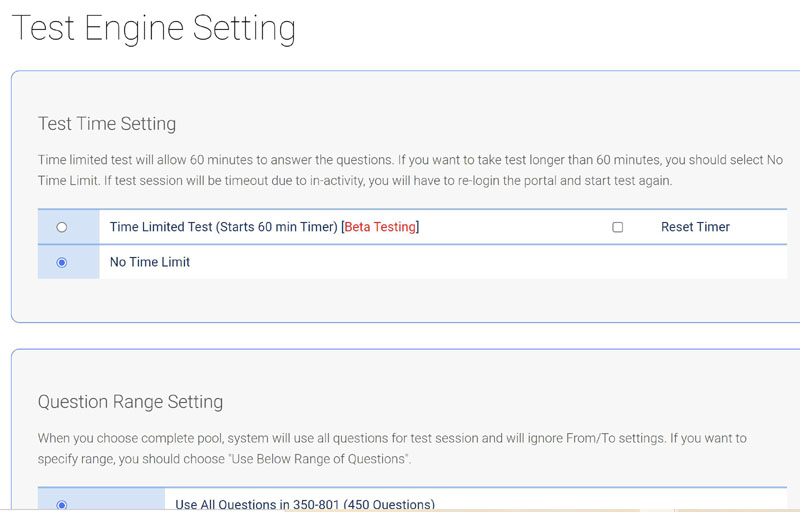
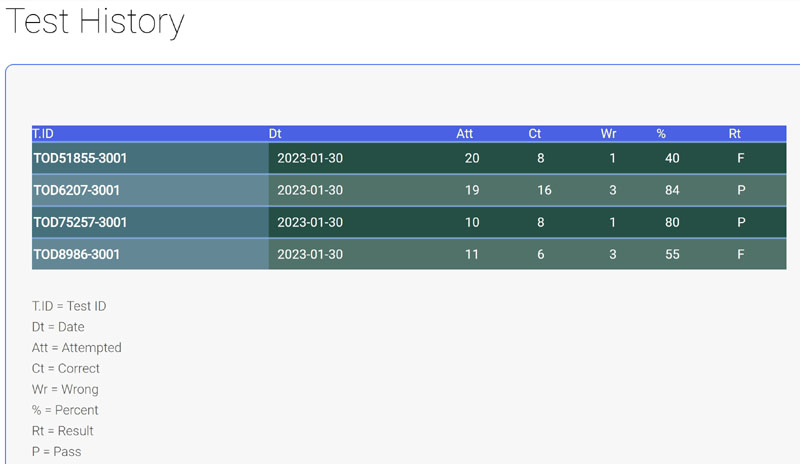
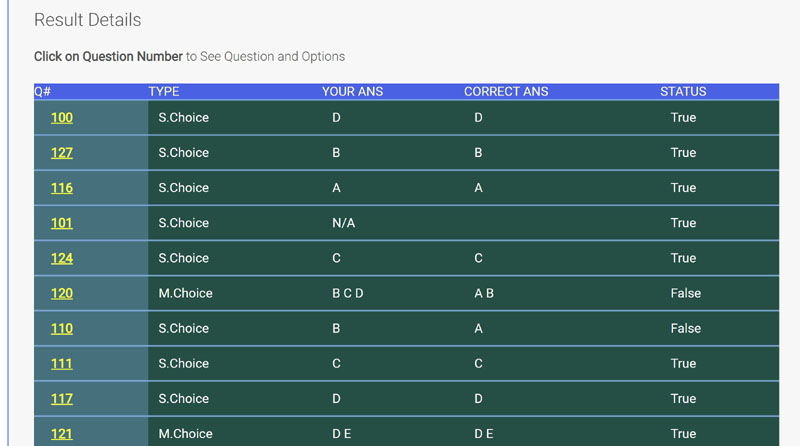
We provide a 100% free free pdf Practice Test, including a downloadable VCE test system that you can install on your computer to practice OGEA-102 Practice Tests. With three months of complimentary updates to our OGEA-102 TOGAF Enterprise Architecture Part 2 Mock Exam questions and Practice Tests, you can trust that you are always studying the most current and relevant material.
At killexams.com, we offer two exceptional formats of authentic OGEA-102 exam questions and answers: OGEA-102 PDF document and OGEA-102 VCE exam simulator. The OGEA-102 real exam evolves swiftly, yet our OGEA-102 PDF file is accessible on any device, allowing you to print OGEA-102 free pdf dumps and craft your personalized study guide. Our proven success rate exceeds 98.9%, with our OGEA-102 questions mirroring the actual exam at 98% similarity. Are you aiming to ace the OGEA-102 exam on your first try? Secure the 2026 updated The-Open-Group OGEA-102 real exam questions from killexams.com. Effortlessly access and master the OGEA-102 practice exam PDF file on any device, saving valuable time and unlocking more study opportunities for OGEA-102 questions. Hone your skills with OGEA-102 free pdf dumps using our cutting-edge VCE exam simulator until you consistently achieve a perfect score. Once confident, head straight to the test center for the real OGEA-102 exam. While numerous pass guarantee providers flood the web, most offer outdated and unreliable OGEA-102 free pdf dumps. It is crucial to identify a trustworthy and credible OGEA-102 practice exam source online. Avoid wasting time on endless research; place your confidence in killexams.com instead of spending hundreds on unverified OGEA-102 free pdf dumps. Visit killexams.com and download 100% free OGEA-102 free pdf dumps Practice Test questions today.
OGEA-102 Practice Questions, OGEA-102 study guides, OGEA-102 Questions and Answers, OGEA-102 Free PDF, OGEA-102 TestPrep, Pass4sure OGEA-102, OGEA-102 Practice Test, Download OGEA-102 Practice Questions, Free OGEA-102 pdf, OGEA-102 Question Bank, OGEA-102 Real Questions, OGEA-102 Mock Test, OGEA-102 Bootcamp, OGEA-102 Download, OGEA-102 VCE, OGEA-102 Test Engine
With killexams.com help, I scored 92% marks in my OGEA-102 exam. Technical standards and complex language can be challenging to understand, but killexams.com made it incredibly easy for me. I am very pleased with my success, and this platform is truly superb.
Martha nods [2026-6-28]
Questions and Answers transformed my OGEA-102 exam preparation, giving my studies a real boost and helping me achieve high marks. Their user-friendly materials made facing the exam straightforward, and I am grateful for their outstanding support.
Richard [2026-4-10]
For those intimidated by the OGEA-102 exam, killexams.com quality exam questions products are a must. Their materials boosted my confidence, helping me succeed in my studies and pass the exam. I am deeply satisfied with their invaluable assistance.
Lee [2026-5-20]
More OGEA-102 testimonials...
What do you mean by OGEA-102 Practice Tests?
OGEA-102 exam practice questions mean exam questions and answers that provide to-the-point knowledge of exam questions rather than going through big OGEA-102 course books and contents. OGEA-102 exam practice questions contain actual questions and answers. By reading and understanding the complete question bank greatly improves your knowledge about the core topics of the exam. It also covers the latest syllabus. These exam questions are taken from actual exam sources, that\'s why these exam questions are sufficient to read and pass the exam. Although you can use other sources also for improvement of knowledge like textbooks and other aid material these practice questions are sufficient to pass the exam.
Of course, Killexams is hundred percent legit along with fully good. There are several functions that makes killexams.com traditional and legit. It provides current and 100 percent valid exam dumps that contains real exams questions and answers. Price is very low as compared to the vast majority of services on internet. The questions and answers are up to date on common basis using most recent brain dumps. Killexams account set up and product delivery is amazingly fast. Data file downloading is definitely unlimited and very fast. Support is available via Livechat and Contact. These are the characteristics that makes killexams.com a robust website that include exam dumps with real exams questions.
OGEA-102 - TOGAF Enterprise Architecture Part 2 dumps
OGEA-102 - TOGAF Enterprise Architecture Part 2 PDF Download
OGEA-102 - TOGAF Enterprise Architecture Part 2 Real Exam Questions
OGEA-102 - TOGAF Enterprise Architecture Part 2 techniques
OGEA-102 - TOGAF Enterprise Architecture Part 2 teaching
OGEA-102 - TOGAF Enterprise Architecture Part 2 Actual Questions
OGEA-102 - TOGAF Enterprise Architecture Part 2 information source
OGEA-102 - TOGAF Enterprise Architecture Part 2 guide
OGEA-102 - TOGAF Enterprise Architecture Part 2 Exam Questions
OGEA-102 - TOGAF Enterprise Architecture Part 2 PDF Download
OGEA-102 - TOGAF Enterprise Architecture Part 2 learn
OGEA-102 - TOGAF Enterprise Architecture Part 2 Dumps
OGEA-102 - TOGAF Enterprise Architecture Part 2 Latest Questions
OGEA-102 - TOGAF Enterprise Architecture Part 2 Latest Questions
OGEA-102 - TOGAF Enterprise Architecture Part 2 real questions
OGEA-102 - TOGAF Enterprise Architecture Part 2 teaching
OGEA-102 - TOGAF Enterprise Architecture Part 2 exam dumps
OGEA-102 - TOGAF Enterprise Architecture Part 2 Exam Questions
OGEA-102 - TOGAF Enterprise Architecture Part 2 Exam Questions
OGEA-102 - TOGAF Enterprise Architecture Part 2 boot camp
OGEA-102 - TOGAF Enterprise Architecture Part 2 exam syllabus
OGEA-102 - TOGAF Enterprise Architecture Part 2 exam
OGEA-102 - TOGAF Enterprise Architecture Part 2 study help
OGEA-102 - TOGAF Enterprise Architecture Part 2 information search
OGEA-102 - TOGAF Enterprise Architecture Part 2 Dumps
OGEA-102 - TOGAF Enterprise Architecture Part 2 questions
OGEA-102 - TOGAF Enterprise Architecture Part 2 questions
OGEA-102 - TOGAF Enterprise Architecture Part 2 Free Exam PDF
OGEA-102 - TOGAF Enterprise Architecture Part 2 exam success
OGEA-102 - TOGAF Enterprise Architecture Part 2 PDF Questions
OGEA-102 - TOGAF Enterprise Architecture Part 2 real questions
OGEA-102 - TOGAF Enterprise Architecture Part 2 study help
OGEA-102 - TOGAF Enterprise Architecture Part 2 Free PDF
OGEA-102 - TOGAF Enterprise Architecture Part 2 cheat sheet
OGEA-102 - TOGAF Enterprise Architecture Part 2 outline
OGEA-102 - TOGAF Enterprise Architecture Part 2 study tips
OGEA-102 - TOGAF Enterprise Architecture Part 2 study help
OGEA-102 - TOGAF Enterprise Architecture Part 2 study help
OGEA-102 - TOGAF Enterprise Architecture Part 2 Exam Questions
OGEA-102 - TOGAF Enterprise Architecture Part 2 Exam dumps
OGEA-102 - TOGAF Enterprise Architecture Part 2 Actual Questions
OGEA-102 - TOGAF Enterprise Architecture Part 2 study help
OGEA-102 - TOGAF Enterprise Architecture Part 2 boot camp
OGEA-102 - TOGAF Enterprise Architecture Part 2 test prep
Prepare smarter and pass your exams on the first attempt with Killexams.com – the trusted source for authentic exam questions and answers. We provide updated and verified practice test questions, study guides, and PDF exam dumps that match the actual exam format. Unlike many other websites that resell outdated material, Killexams.com ensures daily updates and accurate content written and reviewed by certified experts.
Download real exam questions in PDF format instantly and start preparing right away. With our Premium Membership, you get secure login access delivered to your email within minutes, giving you unlimited downloads of the latest questions and answers. For a real exam-like experience, practice with our VCE Exam Simulator, track your progress, and build 100% exam readiness.
Join thousands of successful candidates who trust Killexams.com for reliable exam preparation. Sign up today, access updated materials, and boost your chances of passing your exam on the first try!
Below are some important links for test taking candidates
Medical Exams
Financial Exams
Language Exams
Entrance Tests
Healthcare Exams
Quality Assurance Exams
Project Management Exams
Teacher Qualification Exams
Banking Exams
Request an Exam
Search Any Exam