AWS Certified Solutions Architect - Associate Practice Test


Title: AWS Certified Solutions Architect - Associate (SAA-C03)
Test Detail:
The AWS Certified Solutions Architect - Associate (SAA-C03) exam validates the knowledge and skills required to design and deploy scalable- highly available- and fault-tolerant systems on the Amazon Web Services (AWS) platform. This certification is designed for individuals who work as solutions architects and are responsible for designing and implementing AWS-based applications.
Course Outline:
The AWS Certified Solutions Architect - Associate course provides participants with comprehensive knowledge and hands-on experience in designing and deploying applications on AWS. The following is a general outline of the key areas covered in the certification program:
- Design secure access to AWS resources
- Access controls and management across multiple accounts
- AWS federated access and identity services
- AWS Identity and Access Management [IAM]
- AWS IAM Identity Center
- AWS global infrastructure
- Availability Zones
- AWS Regions
- AWS security best practices
- principle of least privilege
- The AWS shared responsibility model
- Applying AWS security best practices to IAM users and root users
- multi-factor authentication [MFA]
- Designing a flexible authorization model
- IAM users
- groups
- roles
- policies
- Designing a role-based access control strategy
- AWS Security Token Service [AWS STS]
- role switching
- cross-account access
- Designing a security strategy for multiple AWS accounts
- AWS Control Tower
- service control policies [SCPs]
- Determining the appropriate use of resource policies for AWS services
- Determining when to federate a directory service with IAM roles
- Design secure workloads and applications.
- Application configuration and credentials security
- AWS service endpoints
- Control ports- protocols- and network traffic on AWS
- Secure application access
- Security services with appropriate use cases
- Amazon Cognito
- Amazon GuardDuty
- Amazon Macie
- Threat vectors external to AWS
- DDoS
- SQL injection
- Designing VPC architectures with security components
- security groups
- route tables
- network ACLs
- NAT gateways
- Determining network segmentation strategies
- using public subnets
- private subnets
- Integrating AWS services to secure applications
-AWS Shield
- AWS WAF
- IAM Identity Center
- AWS Secrets Manager
- Securing external network connections to and from the AWS Cloud
- VPN
- AWS Direct Connect
- Determine appropriate data security controls
- Data access and governance
- Data recovery
- Data retention and classification
- Encryption and appropriate key management
- Aligning AWS technologies to meet compliance requirements
- Encrypting data at rest
- AWS Key Management Service [AWS KMS]
- Encrypting data in transit
- AWS Certificate Manager [ACM] using TLS
- Implementing access policies for encryption keys
- Implementing data backups and replications
- Implementing policies for data access- lifecycle- and protection
- Rotating encryption keys and renewing certificates
- Design scalable and loosely coupled architectures
- API creation and management
- Amazon API Gateway
- REST API
- AWS managed services with appropriate use cases
- AWS Transfer Family
- Amazon Simple Queue Service [Amazon SQS]
- Secrets Manager
- Caching strategies
- Design principles for microservices
- stateless workloads compared with stateful workloads
- Event-driven architectures
- Horizontal scaling and vertical scaling
- How to appropriately use edge accelerators
- content delivery network [CDN]
- How to migrate applications into containers
- Load balancing concepts
- Application Load Balancer
- Multi-tier architectures
- Queuing and messaging concepts
- publish/subscribe
- Serverless technologies and patterns
- AWS Fargate
- AWS Lambda
- Storage types with associated characteristics
- object
- file
- block
- The orchestration of containers
- Amazon Elastic Container Service [Amazon ECS]
- Amazon Elastic Kubernetes Service [Amazon EKS])
- When to use read replicas
- Workflow orchestration
- AWS Step Functions
- Designing event-driven
- microservice and multi-tier architectures based on requirements
- Determining scaling strategies for components used in an architecture design
- Determining the AWS services required to achieve loose coupling based on requirements
- Determining when to use containers
- Determining when to use serverless technologies and patterns
- Recommending appropriate compute- storage- networking- and database technologies based on requirements
- Using purpose-built AWS services for workloads
- Design highly available and/or fault-tolerant architectures
- AWS global infrastructure
- Availability Zones
- AWS Regions
- Amazon Route 53
- AWS managed services with appropriate use cases
- Amazon Comprehend
- Amazon Polly
- Basic networking concepts
- route tables
- Disaster recovery (DR) strategies
- backup and restore
- pilot light
- warm standby
- active-active failover
- recovery point objective [RPO]
- recovery time objective [RTO])
- Distributed design patterns
- Failover strategies
- Immutable infrastructure
- Load balancing concepts
- Application Load Balancer
- Proxy concepts
- Amazon RDS Proxy
- Service quotas and throttling
- how to configure the service quotas for a workload in a standby environment
- Storage options and characteristics
- durability
- replication
- Workload visibility
- AWS X-Ray
- Determining automation strategies to ensure infrastructure integrity
- Determining the AWS services required to provide a highly available and/or fault-tolerant architecture across AWS Regions or Availability Zones
- Identifying metrics based on business requirements to deliver a highly available solution
- Implementing designs to mitigate single points of failure
- Implementing strategies to ensure the durability and availability of data
- backups
- Selecting an appropriate DR strategy to meet business requirements
- Using AWS services that improve the reliability of legacy applications and applications not built for the cloud
- when application changes are not possible
- Using purpose-built AWS services for workloads
- Determine high-performing and/or scalable storage solutions
- Hybrid storage solutions to meet business requirements
- Storage services with appropriate use cases
- Amazon S3
- Amazon Elastic File System [Amazon EFS]
- Amazon Elastic Block Store [Amazon EBS]
- Storage types with associated characteristics
- object
- file
- block
- Determining storage services and configurations that meet performance demands
- Determining storage services that can scale to accommodate future needs
- Design high-performing and elastic compute solutions
- AWS compute services with appropriate use cases
- AWS Batch
- Amazon EMR
- Fargate
- Distributed computing concepts supported by AWS global infrastructure and edge services
- Queuing and messaging concepts
- publish/subscribe
- Scalability capabilities with appropriate use cases
- Amazon EC2 Auto Scaling
- AWS Auto Scaling
- Serverless technologies and patterns
- Lambda
- Fargate
- The orchestration of containers
- Amazon ECS
- Amazon EKS
- Decoupling workloads so that components can scale independently
- Identifying metrics and conditions to perform scaling actions
- Selecting the appropriate compute options and features (for example- EC2 instance types) to meet business requirements
- Selecting the appropriate resource type and size (for example- the amount of Lambda memory) to meet business requirements
- Determine high-performing database solutions
- AWS global infrastructure
- Availability Zones
- AWS Regions
- Caching strategies and services
- Amazon ElastiCache
- Data access patterns
- read-intensive compared with write-intensive
- Database capacity planning
- capacity units
- instance types
- Provisioned IOPS
- Database connections and proxies
- Database engines with appropriate use cases
- heterogeneous migrations
- homogeneous migrations
- Database replication
- read replicas
- Database types and services
- serverless
- relational compared with non-relational
- in-memory
- Configuring read replicas to meet business requirements
- Designing database architectures
- Determining an appropriate database engine
- MySQL compared with PostgreSQL
- Determining an appropriate database type
- Amazon Aurora
- Amazon DynamoDB
- Integrating caching to meet business requirements
- Determine high-performing and/or scalable network architectures
- Edge networking services with appropriate use cases
- Amazon CloudFront
- AWS Global Accelerator
- How to design network architecture
- subnet tiers
- routing- IP addressing
- Load balancing concepts
- Application Load Balancer
- Network connection options
- AWS VPN
- Direct Connect
- AWS PrivateLink
- Creating a network topology for various architectures
- global
- hybrid
- multi-tier
- Determining network configurations that can scale to accommodate future needs
- Determining the appropriate placement of resources to meet business requirements
- Selecting the appropriate load balancing strategy
- High-performing data ingestion and transformation solutions
- Data analytics and visualization services with appropriate use cases
- Amazon Athena
- AWS Lake Formation
- Amazon QuickSight
- Data ingestion patterns
- frequency
- Data transfer services with appropriate use cases
- AWS DataSync
- AWS Storage Gateway
- Data transformation services with appropriate use cases
- AWS Glue
- Secure access to ingestion access points
- Sizes and speeds needed to meet business requirements
- Streaming data services with appropriate use cases
- Amazon Kinesis
- Building and securing data lakes
- Designing data streaming architectures
- Designing data transfer solutions
- Implementing visualization strategies
- Selecting appropriate compute options for data processing
- Amazon EMR
- Selecting appropriate configurations for ingestion
- Transforming data between formats
.csv to .parquet
- Design cost-optimized storage solutions
- Access options
- an S3 bucket with Requester Pays object storage
- AWS cost management service features
- cost allocation tags
- multi-account billing
- AWS cost management tools with appropriate use cases
- AWS Cost Explorer
- AWS Budgets
- AWS Cost
- Usage Report
- AWS storage services with appropriate use cases
- Amazon FSx
- Amazon EFS
- Amazon S3
- Amazon EBS
- Backup strategies
- Block storage options
- hard disk drive [HDD] volume types
- solid state drive [SSD] volume types
- Data lifecycles
- Hybrid storage options
- DataSync
- Transfer Family
- Storage Gateway
- Storage access patterns
- Storage tiering
- cold tiering for object storage
- Storage types with associated characteristics
- object
- file
- block
- Designing appropriate storage strategies
- batch uploads to Amazon S3 compared with individual uploads
- Determining the correct storage size for a workload
- Determining the lowest cost method of transferring data for a workload to AWS storage
- Determining when storage auto scaling is required
- Managing S3 object lifecycles
- Selecting the appropriate backup and/or archival solution
- Selecting the appropriate service for data migration to storage services
- Selecting the appropriate storage tier
- Selecting the correct data lifecycle for storage
- Selecting the most cost-effective storage service for a workload
- Design cost-optimized compute solutions
- AWS cost management service features
- cost allocation tags
- multi-account billing
- AWS cost management tools with appropriate use cases
- Cost Explorer
- AWS Budgets
- AWS Cost
- Usage Report
- AWS global infrastructure
- Availability Zones
- AWS Regions
- AWS purchasing options
- Spot Instances
- Reserved Instances
- Savings Plans
- Distributed compute strategies
- edge processing
- Hybrid compute options
- AWS Outposts
- AWS Snowball Edge
- Instance types- families- and sizes
- memory optimized
- compute optimized
- virtualization
- Optimization of compute utilization
- containers
- serverless computing
- microservices
- Scaling strategies
- auto scaling
- hibernation
- Determining an appropriate load balancing strategy
- Application Load Balancer [Layer 7] compared with Network Load Balancer [Layer 4] compared with Gateway Load Balancer
- Determining appropriate scaling methods and strategies for elastic workloads
- horizontal compared with vertical
- EC2 hibernation
- Determining cost-effective AWS compute services with appropriate use cases
- Lambda
- Amazon EC2
- Fargate
- Determining the required availability for different classes of workloads
- production workloads
- non-production workloads
- Selecting the appropriate instance family for a workload
- Selecting the appropriate instance size for a workload
- Design cost-optimized database solutions
- AWS cost management service features
- cost allocation tags
- multi-account billing
- AWS cost management tools with appropriate use cases
- Cost Explorer
- AWS Budgets
- AWS Cost and Usage Report
- Caching strategies
- Data retention policies
- Database capacity planning
- capacity units
- Database connections and proxies
- Database engines with appropriate use cases
- heterogeneous migrations
- homogeneous migrations
- Database replication
- read replicas
- Database types and services
- relational compared with non-relational
- Aurora
- DynamoDB
- Designing appropriate backup and retention policies
- snapshot frequency
- Determining an appropriate database engine
- MySQL compared with PostgreSQL
- Determining cost-effective AWS database services with appropriate use cases
- DynamoDB compared with Amazon RDS
- serverless
- Determining cost-effective AWS database types
- time series format
- columnar format
- Migrating database schemas and data to different locations and/or different database engines
- Design cost-optimized database solutions
- AWS cost management service features
- cost allocation tags
- multi-account billing
- AWS cost management tools with appropriate use cases
- Cost Explorer
- AWS Budgets
- AWS Cost and Usage Report
- Load balancing concepts
- Application Load Balancer
- NAT gateways
- NAT instance costs compared with NAT gateway costs
- Network connectivity
- private lines
- dedicated lines
- VPNs
- Network routing- topology- and peering
- AWS Transit Gateway
- VPC peering
- Network services with appropriate use cases
- DNS
- Configuring appropriate NAT gateway types for a network
- a single shared NAT gateway compared with NAT gateways for each Availability Zone
- Configuring appropriate network connections
- Direct Connect compared with VPN compared with internet
- Configuring appropriate network routes to minimize network transfer costs
- Region to Region
- Availability Zone to Availability Zone
- private to public
- Global Accelerator
- VPC endpoints
- Determining strategic needs for content delivery networks (CDNs) and edge caching
- Reviewing existing workloads for network optimizations
- Selecting an appropriate throttling strategy
- Selecting the appropriate bandwidth allocation for a network device
- a single VPN compared with multiple VPNs
- Direct Connect speed

SAA-C03 MCQs
SAA-C03 TestPrep
SAA-C03 Study Guide
SAA-C03 Practice Test
SAA-C03 Exam Questions
Amazon
SAA-C03
AWS Certified Solutions Architect - Associate
https://killexams.com/pass4sure/exam-detail/SAA-C03
Question: 84
A Solutions Architect is building a cloud infrastructure where EC2 instances require access to various AWS services
such as S3 and Redshift. The Architect will also need to provide access to system
administrators so they can deploy and test their changes.
Which configuration should be used to ensure that the access to the resources is secured and not compromised? (Select
TWO.)
A. Store the AWS Access Keys in the EC2 instance.
B. Assign an IAM role to the Amazon EC2 instance.
C. Store the AWS Access Keys in AC
E. Enable Multi-Factor Authentication.
F. Assign an IAM user for each Amazon EC2 Instance.
Answer: B,D
Explanation:
In this scenario, the correct answers are:
� Enable Multi-Factor Authentication
� Assign an IAM role to the Amazon EC2 instance
Always remember that you should associate IAM roles to EC2 instances and not an IAM user, for the purpose of
accessing other AWS services. IAM roles are designed so that your applications can securely make API requests from
your instances, without requiring you to manage the security credentials that the applications use. Instead of creating
and distributing your AWS credentials, you can delegate permission to make API requests using IAM roles.
AWS Multi-Factor Authentication (MFA) is a simple best practice that adds an extra layer of protection on top of your
user name and password. With MFA enabled, when a user signs in to an AWS website, they will be prompted for their
user name and password (the first factor-what they know), as well as for an authentication code from their AWS
MFA device (the second factor-what they have). Taken together, these multiple factors provide increased security for
your AWS account settings and resources. You can enable MFA for your AWS account and for individual IAM users
you have created under your account. MFA can also be used to control access to AWS service APIs.
Storing the AWS Access Keys in the EC2 instance is incorrect. This is not recommended by AWS as it can be
compromised. Instead of storing access keys on an EC2 instance for use by applications that run on the instance and
make AWS API requests, you can use an IAM role to provide temporary access keys for these applications.
Assigning an IAM user for each Amazon EC2 Instance is incorrect because there is no need to create an IAM user for
this scenario since IAM roles already provide greater flexibility and easier management. Storing the AWS Access
Keys in ACM is incorrect because ACM is just a service that lets you easily provision, manage, and deploy public and
private SSL/TLS certificates for use with AWS services and your internal connected resources. It is not used as a
secure storage for your access keys. References:
https://aws.amazon.com/iam/details/mfa/
https://docs.aws.amazon.com/AWSEC2/latest/UserGuide/iam-roles-for-amazon-ec2.html
Check out this AWS IAM Cheat Sheet:
https://tutorialsdojo.com/aws-identity-and-access-management-iam/
Question: 85
A company needs to deploy at least 2 EC2 instances to support the normal workloads of its application and
automatically scale up to 6 EC2 instances to handle the peak load. The architecture must be highly available and fault-
tolerant as it is processing mission-critical workloads.
As the Solutions Architect of the company, what should you do to meet the above requirement?
A. Create an Auto Scaling group of EC2 instances and set the minimum capacity to 2 and the maximum capacity to 4.
Deploy 2 instances in Availability Zone A and 2 instances in Availability Zone B.
B. Create an Auto Scaling group of EC2 instances and set the minimum capacity to 4 and the maximum capacity to 6.
Deploy 2 instances in Availability Zone A and another 2 instances in Availability Zone B.
C. Create an Auto Scaling group of EC2 instances and set the minimum capacity to 2 and the maximum capacity to 6.
Deploy 4 instances in Availability Zone A.
D. Create an Auto Scaling group of EC2 instances and set the minimum capacity to 2 and the
maximum capacity to 6. Use 2 Availability Zones and deploy 1 instance for each AZ.
Answer: B
Explanation:
Amazon EC2 Auto Scaling helps ensure that you have the correct number of Amazon EC2 instances available to
handle the load for your application. You create collections of EC2 instances, called Auto Scaling groups. You can
specify the minimum number of instances in each Auto Scaling group, and Amazon EC2 Auto Scaling ensures that
your group never goes below this size. You can also specify the maximum number of instances in each Auto Scaling
group, and Amazon EC2 Auto Scaling ensures that your group never goes above this size.
To achieve highly available and fault-tolerant architecture for your applications, you must deploy all your instances in
different Availability Zones. This will help you isolate your resources if an outage occurs. Take note that to achieve
fault tolerance, you need to have redundant resources in place to avoid any system degradation in the event of a server
fault or an Availability Zone outage. Having a fault-tolerant architecture entails an extra cost in running additional
resources than what is usually needed. This is to ensure that the mission-critical workloads are processed.
Since the scenario requires at least 2 instances to handle regular traffic, you should have 2 instances running all the
time even if an AZ outage occurred. You can use an Auto Scaling Group to automatically scale your compute
resources across two or more Availability Zones. You have to specify the minimum capacity to 4 instances and the
maximum capacity to 6 instances. If each AZ has 2 instances running, even if an AZ fails, your system will still run a
minimum of 2 instances.
Hence, the correct answer in this scenario is: Create an Auto Scaling group of EC2 instances and set the minimum
capacity to 4 and the maximum capacity to 6. Deploy 2 instances in Availability Zone A and another 2 instances in
Availability Zone B.
The option that says: Create an Auto Scaling group of EC2 instances and set the minimum capacity to 2 and the
maximum capacity to 6. Deploy 4 instances in Availability Zone A is incorrect because the instances are only deployed
in a single Availability Zone. It cannot protect your applications and data from datacenter or AZ failures.
The option that says: Create an Auto Scaling group of EC2 instances and set the minimum capacity to 2 and the
maximum capacity to 6. Use 2 Availability Zones and deploy 1 instance for each AZ is incorrect. It is required to have
2 instances running all the time. If an AZ outage happened, ASG will launch a new
instance on the unaffected AZ. This provisioning does not happen instantly, which means that for a certain period of
time, there will only be 1 running instance left.
The option that says: Create an Auto Scaling group of EC2 instances and set the minimum capacity to 2 and the
maximum capacity to 4. Deploy 2 instances in Availability Zone A and 2 instances in Availability Zone B is incorrect.
Although this fulfills the requirement of at least 2 EC2 instances and high availability, the maximum capacity setting is
wrong. It should be set to 6 to properly handle the peak load. If an AZ outage occurs and the system is at its peak load,
the number of running instances in this setup will only be 4 instead of 6 and this will affect the performance of your
application. References:
https://docs.aws.amazon.com/autoscaling/ec2/userguide/what-is-amazon-ec2-auto-scaling.html
https://docs.aws.amazon.com/documentdb/latest/developerguide/regions-and-azs.html
Check out this AWS Auto Scaling Cheat Sheet:
https://tutorialsdojo.com/aws-auto-scaling/
Question: 86
A company is using Amazon S3 to store frequently accessed data. When an object is created or deleted, the S3 bucket
will send an event notification to the Amazon SQS queue. A solutions architect needs to create a solution that will
notify the development and operations team about the created or deleted objects.
Which of the following would satisfy this requirement?
A. Create an Amazon SNS topic and configure two Amazon SQS queues to subscribe to the topic. Grant Amazon S3
permission to send notifications to Amazon SNS and update the bucket to use the new SNS topic.
B. Create a new Amazon SNS FIFO topic for the other team. Grant Amazon S3 permission to send the notification to
the second SNS topic.
C. Set up an Amazon SNS topic and configure two Amazon SQS queues to poll the SNS topic. Grant Amazon S3
permission to send notifications to Amazon SNS and update the bucket to use the new SNS topic.
D. Set up another Amazon SQS queue for the other team. Grant Amazon S3 permission to send a
notification to the second SQS queue.
Answer: A
Explanation:
The Amazon S3 notification feature enables you to receive notifications when certain events happen in your bucket. To
enable notifications, you must first add a notification configuration that identifies the events you want Amazon S3 to
publish and the destinations where you want Amazon S3 to send the notifications. You store this configuration in the
notification subresource that is associated with a bucket. Amazon S3 supports the following destinations where it can
publish events:
� Amazon Simple Notification Service (Amazon SNS) topic
� Amazon Simple Queue Service (Amazon SQS) queue
� AWS Lambda
In Amazon SNS, the fanout scenario is when a message published to an SNS topic is replicated and pushed to multiple
endpoints, such as Amazon SQS queues, HTTP(S) endpoints, and Lambda functions. This allows for parallel
asynchronous processing.
For example, you can develop an application that publishes a message to an SNS topic whenever an order is placed for
a product. Then, SQS queues that are subscribed to the SNS topic receive identical notifications for the new order. An
Amazon Elastic Compute Cloud (Amazon EC2) server instance attached to one of the SQS queues can handle the
processing or fulfillment of the order. And you can attach another Amazon EC2 server instance to a data warehouse
for analysis of all orders received. Based on the given scenario, the existing setup sends the event notification to an
SQS queue. Since you need to send the notification to the development and operations team, you can use a
combination of Amazon SNS and SQS. By using the message fanout pattern, you can create a topic and use two
Amazon SQS queues to subscribe to the topic. If Amazon SNS receives an event notification, it will
publish the message to both subscribers.
Take note that Amazon S3 event notifications are designed to be delivered at least once and to one destination only.
You cannot attach two or more SNS topics or SQS queues for S3 event notification. Therefore, you must send the
event notification to Amazon SNS.
Hence, the correct answer is: Create an Amazon SNS topic and configure two Amazon SQS queues to subscribe to the
topic. Grant Amazon S3 permission to send notifications to Amazon SNS and update the bucket to use the new SNS
topic.
The option that says: Set up another Amazon SQS queue for the other team. Grant Amazon S3 permission to send a
notification to the second SQS queue is incorrect because you can only add 1 SQS or SNS at a time for Amazon S3
events notification. If you need to send the events to multiple subscribers, you should implement a message fanout
pattern with Amazon SNS and Amazon SQS.
The option that says: Create a new Amazon SNS FIFO topic for the other team. Grant Amazon S3 permission to send
the notification to the second SNS topic is incorrect. Just as mentioned in the previous option, you can only add 1 SQS
or SNS at a time for Amazon S3 events notification. In addition, neither Amazon SNS FIFO topic nor Amazon SQS
FIFO queue is warranted in this scenario. Both of them can be used together to provide strict message ordering and
message deduplication. The FIFO capabilities of each of these services work together to act as a fully managed service
to integrate distributed applications that require data consistency in near-real-time.
The option that says: Set up an Amazon SNS topic and configure two Amazon SQS queues to poll the
SNS topic. Grant Amazon S3 permission to send notifications to Amazon SNS and update the bucket to
use the new SNS topic is incorrect because you can�t poll Amazon SNS. Instead of configuring queues
to poll Amazon SNS, you should configure each Amazon SQS queue to subscribe to the SNS topic.
References:
https://docs.aws.amazon.com/AmazonS3/latest/dev/ways-to-add-notification-config-to-bucket.html
https://docs.aws.amazon.com/AmazonS3/latest/dev/NotificationHowTo.html#notification-how-to-overvie
w
https://docs.aws.amazon.com/sns/latest/dg/welcome.html
Check out this Amazon S3 Cheat Sheet:
https://tutorialsdojo.com/amazon-s3/
Amazon SNS Overview:
https://youtu.be/ft5R45lEUJ8
Question: 87
An accounting application uses an RDS database configured with Multi-AZ deployments to improve availability .
What would happen to RDS if the primary database instance fails?
A. The IP address of the primary DB instance is switched to the standby DB instance.
B. The primary database instance will reboot.
C. A new database instance is created in the standby Availability Zone.
D. The canonical name record (CNAME) is switched from the primary to standby instance.
Answer: D
Explanation:
In Amazon RDS, failover is automatically handled so that you can resume database operations as quickly as possible
without administrative intervention in the event that your primary database instance goes down. When failing over,
Amazon RDS simply flips the canonical name record (CNAME) for your DB instance to point at the standby, which is
in turn promoted to become the new primary.
The option that says: The IP address of the primary DB instance is switched to the standby DB instance is incorrect
since IP addresses are per subnet, and subnets cannot span multiple AZs.
The option that says: The primary database instance will reboot is incorrect since in the event of a failure, there is no
database to reboot with.
The option that says: A new database instance is created in the standby Availability Zone is incorrect
since with multi-AZ enabled, you already have a standby database in another AZ.
References:
https://aws.amazon.com/rds/details/multi-az/
https://aws.amazon.com/rds/faqs/
Amazon RDS Overview:
https://youtu.be/aZmpLl8K1UU
Check out this Amazon RDS Cheat Sheet:
https://tutorialsdojo.com/amazon-relational-database-service-amazon-rds/
Question: 88
A car dealership website hosted in Amazon EC2 stores car listings in an Amazon Aurora database managed by
Amazon RDS. Once a vehicle has been sold, its data must be removed from the current listings and forwarded to a
distributed processing system.
Which of the following options can satisfy the given requirement?
A. Create an RDS event subscription and send the notifications to Amazon SQ
B. Configure the SQS queues to fan out the event notifications to multiple Amazon SNS topics. Process the data using
Lambda functions.
C. Create an RDS event subscription and send the notifications to AWS Lambda. Configure the Lambda function to
fan out the event notifications to multiple Amazon SQS queues to update the processing system.
D. Create a native function or a stored procedure that invokes a Lambda function. Configure the Lambda function to
send event notifications to an Amazon SQS queue for the processing system to consume.
E. Create an RDS event subscription and send the notifications to Amazon SN
F. Configure the SNS topic to fan out the event notifications to multiple Amazon SQS queues. Process the data using
Lambda
functions.
Answer: C
Explanation:
You can invoke an AWS Lambda function from an Amazon Aurora MySQL-Compatible Edition DB cluster with a
native function or a stored procedure. This approach can be useful when you want to integrate your database running
on Aurora MySQL with other AWS services. For example, you might want to capture data changes whenever a row in
a table is modified in your database.
In the scenario, you can trigger a Lambda function whenever a listing is deleted from the database. You can then write
the logic of the function to send the listing data to an SQS queue and have different processes consume it.
Hence, the correct answer is: Create a native function or a stored procedure that invokes a Lambda function. Configure
the Lambda function to send event notifications to an Amazon SQS queue for the processing system to consume.
RDS events only provide operational events such as DB instance events, DB parameter group events, DB security
group events, and DB snapshot events .
What we need in the scenario is to capture data-modifying events (INSERT, DELETE, UPDATE) which can be
achieved thru native functions or stored procedures. Hence, the following options are incorrect:
� Create an RDS event subscription and send the notifications to Amazon SQS. Configure the SQS queues to fan out
the event notifications to multiple Amazon SNS topics. Process the data using Lambda functions.
� Create an RDS event subscription and send the notifications to AWS Lambda. Configure the Lambda function to fan
out the event notifications to multiple Amazon SQS queues to update the processing system.
� Create an RDS event subscription and send the notifications to Amazon SNS. Configure the SNS topic to fan out the
event notifications to multiple Amazon SQS queues. Process the data using Lambda functions.
References:
https://docs.aws.amazon.com/AmazonRDS/latest/AuroraUserGuide/AuroraMySQL.Integrating.Lambda.h tml
https://aws.amazon.com/blogs/database/capturing-data-changes-in-amazon-aurora-using-aws-lambda/ Amazon Aurora
Overview:
https://youtu.be/iwS1h7rLNBQ
Check out this Amazon Aurora Cheat Sheet: https://tutorialsdojo.com/amazon-aurora/
KILLEXAMS.COM
Killexams.com is a leading online platform specializing in high-quality certification
exam preparation. Offering a robust suite of tools, including MCQs, practice tests,
and advanced test engines, Killexams.com empowers candidates to excel in their
certification exams. Discover the key features that make Killexams.com the go-to
choice for exam success.
Exam Questions:
Killexams.com provides exam questions that are experienced in test centers. These questions are
updated regularly to ensure they are up-to-date and relevant to the latest exam syllabus. By
studying these questions, candidates can familiarize themselves with the content and format of
the real exam.
Exam MCQs:
Killexams.com offers exam MCQs in PDF format. These questions contain a comprehensive
collection of questions and answers that cover the exam topics. By using these MCQs, candidate
can enhance their knowledge and improve their chances of success in the certification exam.
Practice Test:
Killexams.com provides practice test through their desktop test engine and online test engine.
These practice tests simulate the real exam environment and help candidates assess their
readiness for the actual exam. The practice test cover a wide range of questions and enable
candidates to identify their strengths and weaknesses.
Guaranteed Success:
Killexams.com offers a success guarantee with the exam MCQs. Killexams claim that by using this
materials, candidates will pass their exams on the first attempt or they will get refund for the
purchase price. This guarantee provides assurance and confidence to individuals preparing for
certification exam.
Updated Contents:
Killexams.com regularly updates its question bank of MCQs to ensure that they are current and
reflect the latest changes in the exam syllabus. This helps candidates stay up-to-date with the exam
content and increases their chances of success.
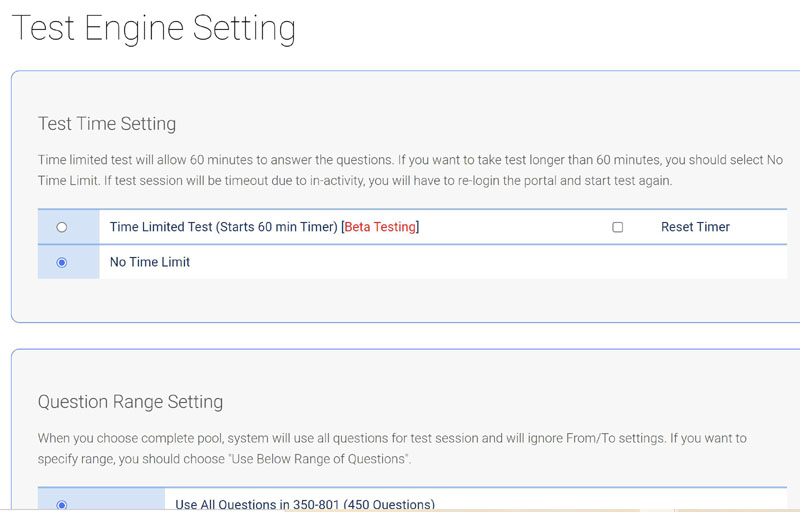
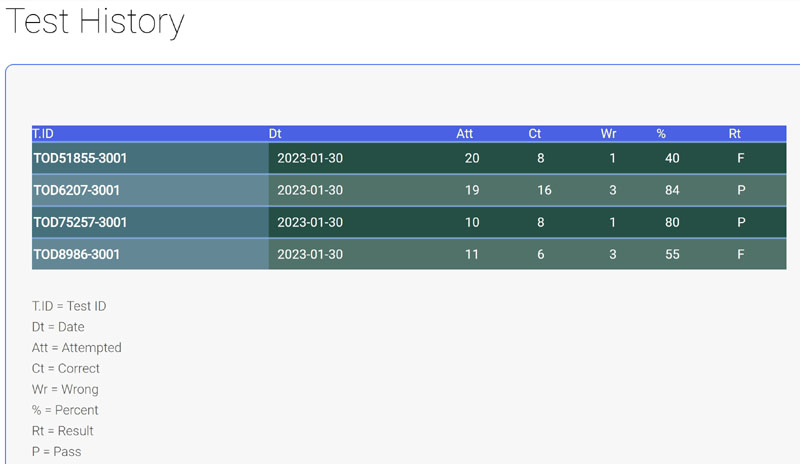
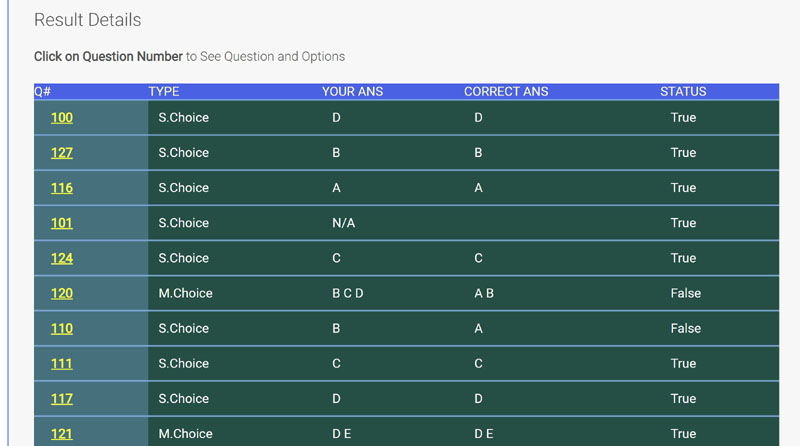
Killexams has introduced Online Test Engine (OTE) that supports iPhone, iPad, Android, Windows and Mac. SAA-C03 Online Testing system will helps you to study and practice using any device. Our OTE provide all features to help you memorize and practice test questions and answers while you are travelling or visiting somewhere. It is best to Practice SAA-C03 MCQs so that you can answer all the questions asked in test center. Our Test Engine uses Questions and Answers from Actual AWS Certified Solutions Architect - Associate exam.
At Killexams.com, we take immense pride in our commitment to helping candidates successfully pass the SAA-C03 test on their very first attempt. With a strong focus on quality and reliability, we have become a trusted name in the realm of certification preparation. Our extensive experience in the industry has enabled us to serve thousands of candidates who have successfully passed their SAA-C03 exams and obtained their certifications.
To excel in the Amazon SAA-C03 exam and unlock higher-paying career opportunities, register at killexams.com to access the latest 2026 updated, authentic SAA-C03 questions with exclusive discounts. Our dedicated team of experts compiles genuine SAA-C03 exam questions to ensure your success. Download the most current SAA-C03 Practice Tests with a full refund guarantee. While many providers offer SAA-C03 Practice Tests, selecting a source with valid and up-to-date 2026 SAA-C03 Practice Tests is crucial. Avoid relying on free online Practice Tests, as they may lack reliability. We provide real SAA-C03 test Questions and Answers in two formats: SAA-C03 PDF files and SAA-C03 VCE test simulator, available as both online and desktop test engines. Pass the Amazon SAA-C03 exam swiftly and effectively with our SAA-C03 Practice Tests. The SAA-C03 PDF format is compatible with any device and can be printed to create your personalized study guide. With a remarkable success rate of 98.9% and a 98% alignment between our SAA-C03 study guide and the actual exam, killexams.com is your key to passing the Amazon SAA-C03 exam on your first attempt. Start your journey with the authentic exam at killexams.com today.
SAA-C03 Practice Questions, SAA-C03 study guides, SAA-C03 Questions and Answers, SAA-C03 Free PDF, SAA-C03 TestPrep, Pass4sure SAA-C03, SAA-C03 Practice Test, Download SAA-C03 Practice Questions, Free SAA-C03 pdf, SAA-C03 Question Bank, SAA-C03 Real Questions, SAA-C03 Mock Test, SAA-C03 Bootcamp, SAA-C03 Download, SAA-C03 VCE, SAA-C03 Test Engine
After failing the SAA-C03 exam, killexams.com exam questions coaching package, with its questions, answers, and exam simulator, helped me score 98%. Their resources made preparation effortless, and I am thankful for their exceptional support.
Shahid nazir [2026-6-2]
The killexams.com practice tests with exam dumps guided me through challenging SAA-C03 exam topics, enabling me to score an impressive 92% with just one week of preparation. Their clear and concise resources ensured I retained critical information, and I am grateful for their support.
Martin Hoax [2026-4-25]
We are thrilled to hear positive feedback from killexams.com users who have achieved their SAA-C03 exam goals. Our team is dedicated to providing exceptional exam questions resources, and we are grateful for your kind words. We look forward to supporting your future certification endeavors.
Shahid nazir [2026-5-29]
More SAA-C03 testimonials...
Where am I able to find Free SAA-C03 exam questions?
When you visit the killexams SAA-C03 exam page, you will be able to download SAA-C03 free practice questions questions. You can also go to https://killexams.com/demo-download/SAA-C03.pdf to download SAA-C03 sample questions. After review visit and register to download the complete question bank of SAA-C03 exam brainpractice questions. These SAA-C03 exam questions are taken from actual exam sources, that\'s why these SAA-C03 exam questions are sufficient to read and pass the exam. Although you can use other sources also for improvement of knowledge like textbooks and other aid material these SAA-C03 practice questions are enough to pass the exam.
Without a doubt, Killexams is fully legit as well as fully efficient. There are several features that makes killexams.com real and genuine. It provides up-to-date and fully valid exam dumps made up of real exams questions and answers. Price is nominal as compared to the vast majority of services online. The questions and answers are up graded on normal basis utilizing most recent brain dumps. Killexams account arrangement and product or service delivery is quite fast. Report downloading can be unlimited and really fast. Aid is available via Livechat and Netmail. These are the features that makes killexams.com a strong website that offer exam dumps with real exams questions.
SAA-C03 - AWS Certified Solutions Architect - Associate braindumps
SAA-C03 - AWS Certified Solutions Architect - Associate test
SAA-C03 - AWS Certified Solutions Architect - Associate exam
SAA-C03 - AWS Certified Solutions Architect - Associate PDF Braindumps
SAA-C03 - AWS Certified Solutions Architect - Associate Test Prep
SAA-C03 - AWS Certified Solutions Architect - Associate PDF Questions
SAA-C03 - AWS Certified Solutions Architect - Associate PDF Download
SAA-C03 - AWS Certified Solutions Architect - Associate book
SAA-C03 - AWS Certified Solutions Architect - Associate testing
SAA-C03 - AWS Certified Solutions Architect - Associate braindumps
SAA-C03 - AWS Certified Solutions Architect - Associate certification
SAA-C03 - AWS Certified Solutions Architect - Associate study tips
SAA-C03 - AWS Certified Solutions Architect - Associate test prep
SAA-C03 - AWS Certified Solutions Architect - Associate dumps
SAA-C03 - AWS Certified Solutions Architect - Associate Exam Questions
SAA-C03 - AWS Certified Solutions Architect - Associate Latest Topics
SAA-C03 - AWS Certified Solutions Architect - Associate real questions
SAA-C03 - AWS Certified Solutions Architect - Associate Study Guide
SAA-C03 - AWS Certified Solutions Architect - Associate braindumps
SAA-C03 - AWS Certified Solutions Architect - Associate real questions
SAA-C03 - AWS Certified Solutions Architect - Associate certification
SAA-C03 - AWS Certified Solutions Architect - Associate study tips
SAA-C03 - AWS Certified Solutions Architect - Associate Free PDF
SAA-C03 - AWS Certified Solutions Architect - Associate boot camp
SAA-C03 - AWS Certified Solutions Architect - Associate Dumps
SAA-C03 - AWS Certified Solutions Architect - Associate learning
SAA-C03 - AWS Certified Solutions Architect - Associate test prep
SAA-C03 - AWS Certified Solutions Architect - Associate test
SAA-C03 - AWS Certified Solutions Architect - Associate Questions and Answers
SAA-C03 - AWS Certified Solutions Architect - Associate Exam Questions
SAA-C03 - AWS Certified Solutions Architect - Associate Latest Topics
SAA-C03 - AWS Certified Solutions Architect - Associate Exam Cram
SAA-C03 - AWS Certified Solutions Architect - Associate PDF Dumps
SAA-C03 - AWS Certified Solutions Architect - Associate Practice Test
SAA-C03 - AWS Certified Solutions Architect - Associate tricks
SAA-C03 - AWS Certified Solutions Architect - Associate Exam Cram
SAA-C03 - AWS Certified Solutions Architect - Associate exam format
SAA-C03 - AWS Certified Solutions Architect - Associate tricks
SAA-C03 - AWS Certified Solutions Architect - Associate boot camp
SAA-C03 - AWS Certified Solutions Architect - Associate answers
SAA-C03 - AWS Certified Solutions Architect - Associate exam syllabus
SAA-C03 - AWS Certified Solutions Architect - Associate exam syllabus
SAA-C03 - AWS Certified Solutions Architect - Associate cheat sheet
SAA-C03 - AWS Certified Solutions Architect - Associate learning
Prepare smarter and pass your exams on the first attempt with Killexams.com – the trusted source for authentic exam questions and answers. We provide updated and verified practice test questions, study guides, and PDF exam dumps that match the actual exam format. Unlike many other websites that resell outdated material, Killexams.com ensures daily updates and accurate content written and reviewed by certified experts.
Download real exam questions in PDF format instantly and start preparing right away. With our Premium Membership, you get secure login access delivered to your email within minutes, giving you unlimited downloads of the latest questions and answers. For a real exam-like experience, practice with our VCE Exam Simulator, track your progress, and build 100% exam readiness.
Join thousands of successful candidates who trust Killexams.com for reliable exam preparation. Sign up today, access updated materials, and boost your chances of passing your exam on the first try!
Below are some important links for test taking candidates
Medical Exams
Financial Exams
Language Exams
Entrance Tests
Healthcare Exams
Quality Assurance Exams
Project Management Exams
Teacher Qualification Exams
Banking Exams
Request an Exam
Search Any Exam